Mini Fridge vs Regular Fridge: Which Do You Need? (November 2026)
Choose a mini fridge for drinks and a small amount of food; choose an apartment refrigerator for household groceries and a separate freezer. The right mini fridge vs regular fridge choice depends on how much you store, how often you shop and the space you have.
On this page (7 sections)
Choose a mini fridge for drinks and a small amount of food; choose an apartment refrigerator for household groceries and a separate freezer. Your mini fridge vs regular fridge choice depends on how much food you store and the space available.
A mini fridge can serve a bedroom, office or dorm without taking up as much space as an apartment refrigerator. A taller apartment refrigerator makes more sense when you need room for groceries, leftovers and frozen food.
The Upstreman holds 3.2 cubic feet, while the Frigidaire and Arctic Chef each hold 7.5 cubic feet. Their fresh-food and freezer compartments have different proportions.
 Best for a bedroom or office
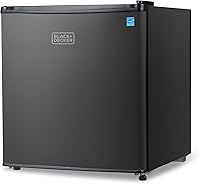
Upstreman 3.2 Cu Ft Mini Fridge With Freezer
 Best for a small household
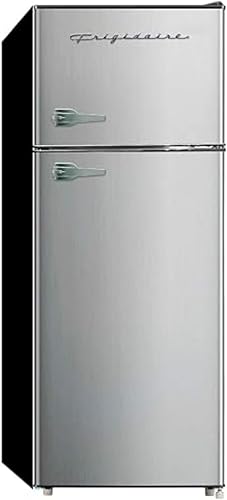
Frigidaire 7.5 Cu Ft 2-Door Apartment Refrigerator
Mini fridge vs regular fridge: which size fits your needs?
Choose a mini fridge for one person's snacks and drinks, or an apartment refrigerator for more grocery storage. Count what you keep cold in a typical week before you decide.
The Upstreman measures 18.7 x 17.4 x 33.1 inches in width, depth and height. The Frigidaire measures 21.5 x 23 x 55.5 inches, and the Arctic Chef measures 23 x 23 x 55 inches.
A taller refrigerator takes more room above the floor, while a mini fridge may fit beneath a counter or beside a desk if its clearance requirements allow. Measure the opening, door swing, vents and path into the room.
When is a mini fridge enough?
A mini fridge is usually enough when you want cold drinks, fruit, snacks and a few everyday items close by. It can supplement a kitchen refrigerator or serve as the main fridge for someone with very light storage needs.
The Upstreman has 2.9 cubic feet of refrigeration space and a 0.3 cubic foot freezer. Its temperature range is not suitable for ice cream or ice cubes.
Choose a larger refrigerator if you buy several days of groceries at once, keep wide meal containers or rely on frozen food. The mini refrigerator buying guide can help you weigh capacity, layout and room dimensions.
When do you need an apartment refrigerator?
An apartment refrigerator is the better fit when you want separate space for fresh food and frozen groceries. The Frigidaire has 6 cubic feet for fresh food and 2 cubic feet for its freezer.
The Arctic Chef has a top freezer and a stated overall capacity of 7.5 cubic feet. Its stated 7 cubic feet of fresh-food space and 0.5 cubic feet of freezer space add up to more than that total, so check the compartment split if it affects your choice.
Apartment refrigerators still need careful measurement. Their greater height and depth can make a tight doorway, low ceiling or narrow kitchen a problem.
How do storage and freezer space compare?
Compare the separate compartments, not just the total cubic feet. A larger overall capacity can still leave you short on freezer space if frozen food is a regular part of your routine.
The Upstreman's 0.3 cubic foot freezer suits a small amount of frozen storage. The Frigidaire has a 2 cubic foot freezer, while the Arctic Chef has a 0.5 cubic foot freezer.
Fresh-food space matters just as much. If you plan to store milk, produce and leftovers alongside drinks, a mini fridge can fill quickly even when the door shelves look useful.
Think about the shape of your usual groceries. Tall bottles, wide meal-prep containers and bulky packages need usable shelf space, not only a promising capacity number.
If frozen food is important, our guide to small refrigerators with a freezer compares that kind of layout. If you rarely freeze anything, see mini fridges with no freezer for more room focused on chilled items.
Which refrigerator uses less power?
The Upstreman has the lowest annual energy consumption among these models, but compare exact models before treating that as a general rule. It uses 206 kWh per year, the Frigidaire uses 378 kWh, and the Arctic Chef uses 250 kWh.
Your actual use can vary with room temperature, door openings, settings and installation. A refrigerator in a hot room or with blocked airflow may not match its stated annual figure.
Energy Star certification is one detail to check alongside capacity and annual consumption. The Upstreman is Energy Star certified; the Frigidaire and Arctic Chef are not listed as certified in the product information.
For a broader explanation of the label, read what the Energy Star label means for mini fridges. You can also use our mini fridge wattage guide to understand power figures and what they can tell you.
Which option works better in a bedroom or office?
A mini fridge is easier to place near a desk or bed because its cabinet is shorter and narrower. Check its stated operating noise, door opening and the distance to a suitable outlet before choosing a spot.
The Upstreman measures 33.1 inches tall and has a reversible door. It operates at 38 dB, according to its specifications.
An apartment refrigerator can suit an office with a shared kitchen or a room where several people store meals. Its larger cabinet gives you more space, but the height and door swing need more planning.
For under-desk placement, measure the desk opening and leave room for ventilation and access. Our guide to a mini fridge under a desk covers fit and setup checks.
How do the three models compare?
The Upstreman suits small, nearby storage, while the two apartment refrigerators suit people who need more food space and a larger freezer. Choose based on the room and the amount of fresh and frozen food you expect to keep.
| Model | Total capacity | Fresh-food space | Freezer space | Best fit |
|---|---|---|---|---|
| Upstreman 3.2 Cu Ft Mini Fridge With Freezer | 3.2 cu ft | 2.9 cu ft | 0.3 cu ft | Drinks, snacks and a small amount of food |
| Frigidaire 7.5 Cu Ft 2-Door Apartment Refrigerator | 7.5 cu ft | 6 cu ft | 2 cu ft | Small households needing separate freezer space |
| Arctic Chef 7.5 Cu Ft 2-Door Apartment Refrigerator | 7.5 cu ft | 7 cu ft | 0.5 cu ft | More fresh-food shelf space in a taller cabinet |
What should you measure before buying?
Measure the available space, delivery route and door's full swing before choosing either size. A cabinet that fits the opening can still block a walkway or fail to pass through a doorway.
Record width, depth and height, then compare them with the exact model dimensions. Leave any clearance the manual requires, especially around ventilation areas.
Check stairs, hallway turns and the final position for enough room to move the unit safely. For additional sizing advice, see common mini fridge dimensions and what fits.
Also check the outlet location and follow the refrigerator manual's electrical and setup instructions. Avoid assuming a compact appliance can be plugged into any extension cord; our extension cord setup guide explains why the manual should guide that choice.
Which one should you choose?
Choose the Upstreman mini fridge if drinks and a few groceries are enough; choose the Frigidaire if you need a larger fresh-food area and a dedicated freezer. The Arctic Chef can suit a similar room, but check its compartment figures if the freezer-to-fridge split matters.
For a shared kitchen or small household, a taller apartment refrigerator is more likely to handle routine groceries. For a bedroom, office or dorm, a mini fridge can keep a small selection close at hand.
Check the mini fridge vs compact refrigerator guide if you're still deciding between size labels. Then compare dimensions, annual energy figures and the food you actually store before you buy.
Frequently asked questions
Is a mini fridge enough for one person?
A mini fridge can be enough for one person if you mainly chill drinks, snacks and a few short-term groceries. Its limited shelves and freezer space make it harder to store a full week's food, large containers or frozen meals, so compare the usable compartments with your routine.
Does a mini fridge use less electricity than a regular fridge?
A mini fridge is smaller, but size alone doesn't confirm which model uses less electricity. Compare each model's annual kWh figure: the Upstreman uses 206 kWh per year, while the Frigidaire uses 378 kWh per year.
Can a mini fridge replace a regular refrigerator?
A mini fridge can replace a regular refrigerator for one person with light storage needs, but it may not hold a household's weekly groceries. Check fresh-food and freezer capacity separately, and consider whether you need door shelves, room for meal containers or a freezer large enough for frozen food.
What is the difference between a mini fridge and a compact refrigerator?
The terms often overlap, and compact refrigerators come in different sizes. Compare the exact outside dimensions, fresh-food capacity and freezer layout instead of relying on the label; our guide to mini fridge vs compact refrigerator explains the distinction.
How much room should I leave around a refrigerator?
Follow the clearance and ventilation instructions in the exact model's manual. Measure the opening, door swing and delivery route before buying, then leave the required space around the cabinet so it can operate as intended.