Mini Refrigerator Buying Guide: What Matters Most
Choose a mini refrigerator by matching its capacity and storage to your space and routine. Measure the route and final spot, decide whether you need a freezer, then compare layout, temperature control and setup needs.
On this page (13 sections)
- What should you check before choosing a mini refrigerator?
- How much capacity do you need?
- Do you need a freezer compartment?
- Which storage layout works for your food?
- How do dimensions and door swing affect placement?
- What features help in everyday use?
- How much noise and energy use should you expect?
- How should you set up a mini refrigerator?
- How should you organize and care for a mini fridge?
- Which mini refrigerator fits each common use?
- What are common mini refrigerator buying mistakes?
- What should you compare before buying?
- How do you choose the right mini refrigerator?
A mini refrigerator should fit your space, hold what you use, and provide the temperature zones you need. Measure the final spot and delivery route first, choose freezer or freezerless storage, then compare capacity, shelves, door swing and setup requirements.
The right choice depends on your routine. A small model may be enough for drinks and a few snacks, while a larger unit can hold more everyday food or add storage alongside a full-size kitchen refrigerator.
This guide explains how to choose by use, size and layout before you compare individual models. For more options, browse our mini refrigerator picks by type.
What should you check before choosing a mini refrigerator?
Start with capacity, outside dimensions and the kind of storage you need. These checks can rule out a poor fit before brand, finish or extra features enter the decision.
Make a short inventory of what you expect to store together: cans, tall bottles, meal containers, produce or frozen items. Think about how often you restock and whether this appliance supplements another refrigerator or serves as your main food storage.
Then measure the installation location and the path to it. Check the manual for placement clearances, door-opening space and electrical requirements.
The best choice is the smallest unit that comfortably holds your usual load. A cabinet that is too small forces you to crowd food or make frequent trips, while excess capacity takes up room and may leave you paying to cool space you rarely use.
How much capacity do you need?
Choose capacity based on the items you store at the same time, not just the room's size. More cubic feet can add flexibility, but shelf spacing and compartment layout determine how useful that capacity feels.
A 1.6 cu ft unit can suit a few drinks, snacks and small food containers. A 3.2 cu ft refrigerator can give you more room for mixed foods, while a 4.5 cu ft model offers more fresh-food capacity for groceries and shared use.
Compare the cabinet dimensions and shelf arrangements along with capacity. A door rack for a 2 L bottle, removable shelves or a separate freezer compartment can matter more than a small increase in the capacity number.
Mini refrigerator examples by capacity
These examples show how size and layout can match different needs. Product dimensions describe the cabinet, so also check the final location and route.
| Example | Capacity | Outside dimensions (W x D x H) | Storage notes |
|---|---|---|---|
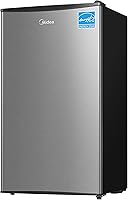
| Midea 1.6 cu ft | 1.6 cu ft | 18.6 x 17.7 x 19.4 in | One glass shelf, bottle rack and chiller box |
| Upstreman 3.2 cu ft | 3.2 cu ft | 18.7 x 17.4 x 33.1 in | 2.9 cu ft refrigeration space and 0.3 cu ft freezer |
| Euhomy beverage refrigerator | 3.2 cu ft | 17.8 x 18.5 x 30.9 in | Five removable shelves for drinks |
| Frigidaire Platinum Series | 4.5 cu ft | 22 x 21 x 32 in | 4.3 cu ft fresh-food space and 0.3 cu ft freezer |
The cabinet with the most capacity may not fit a narrow room or doorway. Measure the full route, including turns, and leave the clearance required by the manual.
For common cabinet sizes and measuring tips, see our mini fridge dimensions guide.
Do you need a freezer compartment?
Choose a freezer compartment only if its size and temperature range suit what you plan to store. Small refrigerator freezers vary, and a chiller box is not automatically a full freezer.
Some compact refrigerators divide their interior between fresh food and a small freezer compartment. The Upstreman example has 2.9 cu ft of refrigeration space and a 0.3 cu ft freezer, while the Frigidaire example has 4.3 cu ft of fresh-food space and a 0.3 cu ft freezer.
The Midea 1.6 cu ft model has a chiller compartment. Its stated temperature range is 28.4°F to 35.6°F, so check the manual and intended use before treating it as frozen-food storage.
If you want a separate freezer section, compare our guide to small refrigerators with a freezer. If you mainly store drinks or chilled food, see mini fridges with no freezer.
Which storage layout works for your food?
Pick shelves and door storage around the containers and bottles you use most. Adjustable or removable shelves help when your items vary in height, while door racks keep frequently used drinks within reach.
Check whether shelves can move or come out, and whether the door can hold larger bottles. A crisper drawer can separate produce, while a can dispenser can keep drinks organized.
A glass-door beverage refrigerator is designed around visible drink storage. The Euhomy example has five removable shelves that fit across five slots and a stated temperature range of 37°F to 61°F.
For a general-purpose model with more food storage, the Frigidaire Platinum Series has glass shelves, a 2 L door basket and a built-in can dispenser.
How do dimensions and door swing affect placement?
Measure the cabinet space, delivery route and door clearance before choosing a model. A fridge that fits its floor outline can still block a walkway or fail to pass through a tight turn.
Record the width, depth and height of the available space. Check nearby cabinets, desks, outlets and baseboards, then consult the manual for ventilation clearance.
A reversible door can let you choose a left- or right-hand opening on models with that feature. Confirm the hinge adjustment instructions and leave enough room for the door to open fully.
Also consider how you will use the refrigerator after it is in place. You need room to remove shelves for cleaning, reach the controls and pull food out without moving nearby furniture.
Use our mini fridge dimensions guide to compare common sizes and plan your measurements. If you are choosing between a mini fridge and a larger compact refrigerator, our mini fridge vs compact refrigerator comparison explains the distinction.
What features help in everyday use?
Prioritize features that solve a specific space or storage problem. Reversible doors, adjustable shelves, leveling feet and clear temperature controls can make a compact refrigerator easier to place and use.
The Upstreman has two adjustable glass shelves, a crisper drawer, reversible door and adjustable leveling feet. Its five temperature levels cover a stated range of 32°F to 50°F, and Upstreman says that range is not suitable for storing ice cream or ice cubes.
The Midea is smaller, with one removable glass shelf, a reversible door and a rack for a 2 L bottle. Midea gives its temperature range as 28.4°F to 35.6°F.
Controls should be simple enough to adjust without guesswork. Once the refrigerator is set up, allow it to cool and use a suitable thermometer if you need to confirm the interior temperature for your food.
How much noise and energy use should you expect?
Compare stated noise and annual energy use when figures are available, then consider where the refrigerator will run. Published numbers help with model comparisons, but room conditions and use can affect what you notice.
The Upstreman has a stated sound level of 38 dB and annual energy consumption of 206 kWh. Midea gives its 1.6 cu ft model a sound level below 42 dB and annual energy consumption of 207 kWh.
The Euhomy beverage refrigerator is described at 36 dB and 0.69 kWh per day. Frigidaire's 4.5 cu ft model is Energy Star certified, but an annual energy-use figure is not provided here.
If the refrigerator will sit beside a bed or desk, pay attention to where its compressor and ventilation openings will be relative to you. A quiet-room setup can make regular operating sounds easier to notice, so a stated decibel figure may help narrow choices.
Compare labels and published figures on the exact model you are considering. For background on the certification, read what the Energy Star label means for mini fridges.
For a guide focused on wattage, see how many watts a mini fridge uses.
How should you set up a mini refrigerator?
Follow the model's manual for transport, placement, clearance and first use. Setup requirements vary, so use the instructions for the specific refrigerator rather than assuming every model needs the same steps.
Set the unit on a stable, level surface and leave the specified ventilation gaps. Keep the outlet accessible, avoid blocking the door or controls with nearby furniture, and check that the appliance does not wobble.
Allow space for air to circulate around the cabinet. Avoid pushing it tight against a wall or trapping it in a closed shelf unless the manual allows that installation.
Poor airflow can make cooling less effective and may cause the unit to run more often.
Euhomy says to leave its beverage refrigerator upright for 24 hours before initial use. Check the manual for the model you buy, especially if it was tilted during delivery.
For questions about plugging in safely, read our mini fridge extension cord guide. When moving a unit, follow our guide to moving a mini fridge safely.
How should you organize and care for a mini fridge?
Keep the interior easy to clean and leave room for air to move around stored items. A compact refrigerator works best when shelves, door racks and compartments match what you keep in it.
Store taller bottles in door racks where the design allows, and place smaller foods where they are easy to see. Avoid packing containers tightly against the back or blocking vents, since crowded shelves can make it harder for cool air to circulate.
Wipe spills promptly, especially sticky drinks or food residue. Clean removable shelves and drawers according to the manual, and let them dry before putting them back.
Some compact refrigerators need manual defrosting. If ice builds up, follow the manufacturer's defrost instructions rather than scraping with a knife or using a sharp tool that could damage the interior.
Check the door seal now and then for debris and make sure the door closes fully. A blocked or loose-fitting door can let warm air in and make the compressor work harder.
Which mini refrigerator fits each common use?
Choose the model whose capacity and layout match the main job. These examples illustrate different priorities, rather than one best size for every room.
Compact drinks and snacks
The Midea 1.6 cu ft model is the smallest example here. Its bottle rack, removable shelf and chiller compartment suit a simple setup for drinks and a few small foods.
It fits a reader who wants a low cabinet that can sit under a counter or beside a desk, provided the measured clearance works. Skip it if you want to stock a week's groceries, store several meal containers or rely on a separate freezer.
Mixed food and a small freezer section
The Upstreman 3.2 cu ft model divides its capacity between 2.9 cu ft of refrigeration and a 0.3 cu ft freezer. Its adjustable shelves and crisper drawer provide separate places for food, while the reversible door can help with room layout.
This model suits a dorm room, office or bedroom where you want more than drinks and snacks plus a small freezer space. Skip it if you need substantial frozen storage or plan to keep ice cream and ice cubes, which the stated temperature range does not support.
More food storage in a compact cabinet
The Frigidaire 4.5 cu ft model has 4.3 cu ft of fresh-food capacity and a 0.3 cu ft freezer compartment. Glass shelves, a 2 L door basket and a can dispenser help organize different items.
It suits someone who wants a compact refrigerator for a bar area, dorm or extra household storage. Skip it if your space cannot accommodate its wider cabinet, or if a large freezer is the main reason you are shopping.
Drinks displayed on shelves
The Euhomy beverage refrigerator holds up to 130 standard cans. Five removable shelves and a glass door focus the layout on drinks rather than mixed groceries.
Choose it for a home bar, office or bedroom where visibility and drink organization matter. Skip it if you need a general food refrigerator, produce drawer or freezer compartment.
What are common mini refrigerator buying mistakes?
The most common mistake is choosing by capacity alone. A capacity figure does not show whether your tall bottles fit, whether the freezer is useful or whether the cabinet can pass through your doorway.
Measure the route as well as the final space. A refrigerator can fit beside a desk and still be impossible to carry through a narrow hallway turn.
Another mistake is treating a chiller compartment as a full freezer. Confirm the compartment type and temperature guidance in the manual before planning to store frozen food.
Don't ignore door swing or ventilation. A reversible door only helps if the hinge can be changed as needed.
It still requires room to open. A tight alcove can block airflow even when the unit fits inside it.
Avoid assuming that every compact refrigerator suits a bedroom. Check its stated sound level, place it on a stable floor and think about whether normal compressor cycling will bother you at night.
Finally, do not overload shelves or block the cooling area with tightly packed items. Leave enough space to see what you have and let air move between containers.
What should you compare before buying?
Compare fit, storage and intended temperature use first, then weigh convenience features. This order makes it easier to see whether a model solves your actual need.
Use this checklist:
- Measure the installation space and delivery route.
- Decide whether you need a freezer, chiller or drinks-only cabinet.
- List the bottles, containers and foods that need to fit.
- Check shelf positions, door racks and usable compartments.
- Confirm door swing, ventilation space and leveling needs.
- Review the manual's setup and temperature instructions.
- Compare stated noise, energy and certification details where available.
- Check how you will defrost and clean the interior.
- Decide whether the unit is a supplement or your main food storage.
Think through a normal week rather than an idealized use. If you only need cold drinks at a desk, a small beverage-focused model may be enough; if several people will store meals, prioritize fresh-food capacity and useful shelf space.
How do you choose the right mini refrigerator?
Choose a mini refrigerator by starting with the job it needs to do: compact drinks and snacks, everyday food storage, a small freezer section or organized beverage storage. Then confirm that its dimensions, door swing and setup instructions work in your room.
Pick the Midea example for a compact drinks-and-snacks setup, the Upstreman for split fresh-food and freezer space, the Frigidaire for more mixed storage, or the Euhomy for cans and bottles on display. For more options by use, browse our mini refrigerator picks by type.
Frequently asked questions
What size mini refrigerator should I buy?
Choose capacity based on what you plan to store at the same time, then confirm the cabinet fits your room and delivery route. A 1.6 cu ft model can suit a few drinks and small food items, while 3.2 to 4.5 cu ft gives more room for groceries.
Compare interior layout as well as the capacity number.
Do mini refrigerators have usable freezers?
Some mini refrigerators have a small freezer or chiller compartment, but its size and temperature range vary by model. Check the model's manual before relying on it for frozen foods.
If you need space mainly for drinks, a beverage refrigerator may be a better fit.
Can a mini refrigerator go in a bedroom?
A mini refrigerator can fit in a bedroom if the space has a suitable outlet, ventilation clearance and a level floor. Noise matters too, so compare maker-stated sound levels where available and consider where the compressor will sit.
Follow the manual's placement and setup instructions.
How do I measure for a mini refrigerator?
Measure the height, width and depth of the final spot, then check the manual for required ventilation space and door swing. Measure the full delivery route, including narrow turns and doorways.
A reversible door can help with orientation, but it does not remove the need for clearance.
Are beverage refrigerators the same as mini refrigerators?
Beverage refrigerators focus on storing cans and bottles, often with shelves arranged for drinks and a glass door. A general mini refrigerator may offer food storage and a small freezer or chiller compartment.
Match the interior layout and temperature range to what you plan to keep inside.