Mini Fridge Dimensions: Common Sizes and What Fits
Mini fridge dimensions range from about 18.6 x 17.7 x 19.4 in for a 1.6 cu ft model to 21.5 x 23 x 55.5 in for a 7.5 cu ft model. Measure your opening, delivery route, ventilation space, and door swing before choosing.
On this page (10 sections)
- What are common mini fridge dimensions?
- How do mini fridge dimensions change by capacity?
- How should you choose mini fridge dimensions for your space?
- How do you measure for a mini fridge?
- How much clearance does a mini fridge need?
- What fits inside a mini fridge?
- What setup and care steps help a mini fridge work well?
- What mistakes lead to a poor size choice?
- Which mini fridge size should you choose?
- Sources
Mini fridge dimensions range from a small cabinet under 20 in tall to an apartment refrigerator that stands more than 4 ft high. Measure the opening, delivery route, door swing, and clearance before choosing by capacity.
Capacity alone won't tell you whether a fridge fits. Compare the exact outside width, depth, and height, then allow room to plug it in, ventilate, and open the door.
This guide compares four examples from 1.6 to 7.5 cu ft and explains how to choose a size for a desk, bedroom, dorm, office, or apartment. For help weighing freezer space, layout, and other features, see our mini refrigerator buying guide.
What are common mini fridge dimensions?
Common mini fridge dimensions span from roughly 19 in wide and tall for a very small model to more than 4 ft tall for a larger apartment refrigerator. These examples show useful size ranges, not fixed standards.
| Capacity | Example outside dimensions (W x D x H) | Size trade-off |
|---|---|---|
| 1.6 cu ft | 18.6 x 17.7 x 19.4 in | Small cabinet, limited storage |
| 3.2 cu ft | 18.7 x 17.4 x 33.1 in | Narrow footprint, taller body, small freezer |
| 4.5 cu ft | 22 x 21 x 32 in | Wider and deeper, with more fresh-food space |
| 7.5 cu ft | 21.5 x 23 x 55.5 in | Tall, two-door layout with a separate freezer |
Similar capacities can have different proportions. A narrow, tall fridge may suit a small floor area but fail under a counter, while a shorter model can require more width.
Compare measurements in the same order. This guide uses width, depth, then height, although some specifications present depth first.
When a dimension is close to your available space, check the manufacturer’s measurement method and account for handles, feet, hinges, and other protrusions.
Cubic feet describes interior capacity, while outside dimensions describe the space the appliance occupies. Shelves and compartments also affect usable storage, so a higher capacity doesn't guarantee that a particular bottle or food container will fit.
How do mini fridge dimensions change by capacity?
A larger capacity often means a taller or wider cabinet, but the shape depends on the model. Compare the actual outside measurements and interior layout instead of estimating from cubic feet.
Mini fridge dimensions around 1.6 cu ft
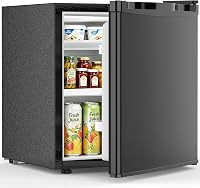
A 1.6 cu ft fridge can fit a compact nook because this Midea measures 18.6 in wide, 17.7 in deep, and 19.4 in high. It has one removable glass shelf, a 2-liter bottle rack, a small chiller compartment, and a reversible door.
Choose this size for a bedside drink, a few snacks, or a personal supply of chilled food when space matters more than storage volume. It can make sense on a sturdy counter or beneath a desk if the required clearance is available and the door has room to open.
Skip it if you need groceries for several people, a full-size freezer, or room for many tall containers. The chiller compartment also divides the interior, so check its placement and the shelf arrangement against the items you plan to store.
Measure the usable opening, not just the nominal desk or counter dimensions. Include any feet, an uneven floor, and the ventilation space required by the manual.
Mini fridge dimensions around 3.2 cu ft
A 3.2 cu ft fridge can have a narrow footprint and still stand about 33 in tall. This Upstreman measures 18.7 in wide, 17.4 in deep, and 33.1 in high, with a 0.3 cu ft freezer compartment.
Consider this size for a dorm, office, or bedroom where you want more food storage than a very small cube can offer. Its two adjustable shelves, crisper drawer, reversible door, and leveling feet give you ways to organize the interior and settle the cabinet on an uneven floor.
The freezer is small, and the temperature settings are not intended for ice cream or ice cubes. Skip this model if frozen food is a priority or if you need the fridge to fit below a low desk.
A reversible door helps you choose the opening direction, but it still needs enough swing room. Check the handle’s path and whether you can reach the shelves without blocking a walkway.
If you need more freezer options, compare models in our small refrigerators with freezers guide.
Mini fridge dimensions around 4.5 cu ft
A 4.5 cu ft compact fridge can be about 22 in wide, 21 in deep, and 32 in high. The Frigidaire example is wider and deeper than the 3.2 cu ft model while standing about the same height.
This size suits someone who needs room for more drinks, snacks, and fresh food than a narrow dorm fridge can hold. It has glass shelves, a 2-liter door basket, a can dispenser, a chiller compartment, and a reversible door.
Skip it if the space is only slightly wider than an 18.7 in cabinet or if you need a full-height freezer for frozen meals. Its 0.3 cu ft freezer compartment is limited, and its wider footprint can make an under-desk installation awkward.
Before choosing it for a bar area or entertaining space, measure the whole cabinet depth and the route from the entrance. The recessed handle and flush back can affect placement, but they don't remove the need for door swing or ventilation space.
Mini fridge dimensions around 7.5 cu ft
A 7.5 cu ft apartment refrigerator can stand about 55.5 in high, with a cabinet 21.5 in wide and 23 in deep. Its height makes overhead clearance and delivery access central to the fit decision.
Choose this model when a small cube would be too limited and you want a dedicated freezer above the refrigerator. It has removable glass shelves, a crisper, interior lighting in both compartments, leveling legs, and rear castors.
Skip it if the appliance must sit under a counter or pass through a low doorway. At 55.5 in high, it needs more overhead room and a route with enough clearance for turns than the smaller models in this guide.
Measure doorways, hallways, and stair landings before moving it in. Its two doors also need open space, so check whether the upper freezer and lower refrigerator doors can swing without hitting a wall or another appliance.
How should you choose mini fridge dimensions for your space?
Start with the physical space and your daily storage needs, then compare the models that meet both. The right size is the smallest cabinet that holds what you need while still leaving room to use it.
For a low desk or a very small nook, start with a model under 20 in tall, such as the 1.6 cu ft example. Confirm there is enough ventilation and that the shelf and chiller arrangement work for your food.
For a narrow floor area with more vertical room, consider a 3.2 cu ft model. It offers more fresh-food capacity and a small freezer, but the freezer’s stated limits make it a poor fit for ice cream or regular frozen-food storage.
If you need more fresh-food space and can spare width and depth, the 4.5 cu ft model is a better match. The 7.5 cu ft apartment refrigerator is for a buyer who needs a larger separate freezer and can accommodate a cabinet more than 4.5 ft high.
Consider these questions before deciding:
- What do you store most: cans, meal containers, produce, milk bottles, or frozen food?
- Do your tallest items fit between shelves, in the door, or in a dedicated bottle rack?
- Does the model’s usable freezer space match what you actually freeze?
- Will the appliance sit on the floor, under a desk, or on a counter?
- Can you keep the plug, temperature control, and door reachable after installation?
- Is the chosen spot away from heat sources and protected from blocked airflow?
For a broader look at how freezer layout changes a mini fridge, read our guide to single-door versus double-door mini fridges.
How do you measure for a mini fridge?
Measure the opening, delivery route, and working space before selecting a model. A fridge can fit its floor outline and still be difficult to deliver, ventilate, or use.
- Measure the width, depth, and height of the intended spot at its narrowest points.
- Check for baseboards, trim, pipes, outlets, handles, and shelves that reduce usable space.
- Measure doorways, hallways, stairs, and turns along the delivery route.
- Compare those measurements with the fridge’s outside dimensions, including handles and protrusions.
- Add the clearances required by the manual and space for the door to swing open.
- Confirm the plug can reach an outlet without pinching the cord.
Use painter’s tape to mark the cabinet footprint on the floor. Add another mark for the open door and the space where you need to stand.
Measure height from the finished floor to the lowest point above the fridge. If the floor slopes or the model has leveling feet, leave room to adjust the feet and level the cabinet.
For an under-desk spot, account for legroom and chair movement as well as height. Our mini fridge under a desk guide explains what to check around the opening and door.
A delivery route matters as much as the final position. Measure each doorway and turn, and consider whether the appliance can be tilted safely according to its instructions.
If the route is tight, compare the cabinet depth and height with the narrowest passage instead of assuming the fridge can be turned at the last moment.
How much clearance does a mini fridge need?
The required clearance depends on the model and its instructions. Leave the gaps in the manual rather than assuming every mini fridge can sit flush against a wall or cabinet.
Mark the fridge’s outer dimensions first, then add clearance around the cabinet. A tight alcove may also need extra depth for the plug, cord bend, or rear ventilation gap.
Plan for access too. The door should open without hitting a wall, and shelves or drawers should be removable if you need to clean them.
Controls should remain easy to reach after the fridge is in place.
Don’t cover vents or crowd the cabinet with objects that block airflow. If the fridge will sit inside an enclosed desk or cabinet, check the manual before installing it there.
What fits inside a mini fridge?
Capacity gives a rough sense of storage volume, but shelf layout and interior shape determine whether your items fit. Door bins, chiller or freezer compartments, and shelf spacing divide the available room.
Measure tall bottles and food containers before buying. Check whether shelves move or come out, and whether a door rack can hold the bottle size you use.
The Midea 1.6 cu ft has a 2-liter bottle rack and removable glass shelf. The Upstreman 3.2 cu ft has two adjustable glass shelves, a crisper drawer, and a separate 0.3 cu ft freezer compartment.
The Frigidaire 4.5 cu ft has glass shelves, a 2-liter door basket, and a can dispenser. The 7.5 cu ft apartment refrigerator has removable glass shelves and a separate 2 cu ft freezer compartment, which gives frozen food more dedicated space than the two smaller freezer examples.
If you mainly chill drinks and snacks, a model without a freezer may give you a simpler interior. See our mini fridges with no freezer guide for options built around refrigerator space.
What setup and care steps help a mini fridge work well?
Set the fridge on a stable, level surface with the clearance its manual calls for. Correct placement protects airflow and makes the door easier to use.
After moving the appliance, follow its manual for the right waiting period before plugging it in. The required wait can depend on how it was transported, so use the instructions for that model instead of guessing.
Once it is in position, adjust leveling feet if available and check that the door closes without catching. Keep the cord clear of the cabinet and avoid using an extension cord unless the manufacturer’s instructions allow it.
Let the interior cool before loading it with food. Don’t pack shelves so tightly that cold air cannot circulate, and keep food away from areas the manual identifies as vents or cooling surfaces.
Manual-defrost models need occasional defrosting when ice builds up. Follow the manual’s steps, protect the floor from meltwater, and avoid sharp tools that could damage the interior.
Clean spills promptly and wash removable shelves or bins with a method that suits their material. Before cleaning, unplug the fridge if the instructions call for it, and dry parts before putting them back.
What mistakes lead to a poor size choice?
The most common mistake is buying by capacity alone. A good capacity number cannot make up for a cabinet that is too tall, deep, or awkward to open in your room.
Other avoidable mistakes include:
- Measuring the wall opening but ignoring baseboards, plugs, handles, or trim.
- Measuring the destination but not the full delivery route.
- Forgetting the door swing, handle projection, or room to remove shelves.
- Treating the small freezer compartment in a compact model like a full freezer.
- Assuming a reversible door will fit without checking hinge clearance.
- Pushing the fridge tightly into an alcove without checking required airflow gaps.
- Choosing a tall model for an under-desk space without measuring the lowest point.
- Assuming the floor is level and stable without checking the feet or surface.
A few extra measurements can prevent a daily annoyance. Mark the cabinet footprint and open-door area before you choose, then compare the marked space with the model’s dimensions and installation instructions.
Which mini fridge size should you choose?
Choose by the room and the kind of storage you need: the 1.6 cu ft Midea for a very small nook, the 3.2 cu ft Upstreman for a narrow spot with a small freezer, the 4.5 cu ft Frigidaire for more fresh-food space, or the 7.5 cu ft Frigidaire for a tall apartment-size setup with a separate freezer.
Skip the smallest option if you need to store full meal containers or frozen food. Skip the taller apartment model if it cannot clear the route, ceiling, or door swing in your space.
Before you decide, compare the exact mini fridge dimensions with the opening, delivery path, and required clearance. Then check the interior shelves and freezer layout against the items you plan to store.
For help comparing other features and layouts, continue to our mini refrigerator buying guide.
Sources
- ENERGY STAR: Refrigerators for general refrigerator efficiency information.
Frequently asked questions
What are standard mini fridge dimensions?
There is no single standard mini fridge size. A compact 1.6 cu ft model can be about 19 in wide and 19 in high, while 3.2 to 4.5 cu ft models in these examples are about 32 to 33 in high.
Compare each model's width, depth, and height, then include the clearance its manual requires.
How much space should I leave around a mini fridge?
Follow the refrigerator manual for clearance because airflow needs vary by model and installation. Measure beyond the cabinet outline for required side, rear, or top gaps, and keep the plug and controls reachable.
Don't assume a flush fit works just because the cabinet physically fits.
Will a mini fridge fit under a desk?
It may, if the fridge fits below the desk with room for ventilation and the door to open. Measure floor to desk underside at the lowest point, then account for the fridge's height, feet, and the manual's required top clearance.
Check the door swing and your legroom too.
Does cubic feet tell me the fridge's outside dimensions?
No. Cubic feet measures interior capacity, not the cabinet's width, depth, or height.
Two refrigerators with the same capacity can have different proportions, shelf layouts, and door shapes, so compare actual exterior measurements with your space and delivery route.
Should I measure a mini fridge with the door open?
Yes, if the fridge will sit near a wall, desk, cabinet, or walkway. Check how far the door and handle extend, whether the door opens wide enough to remove shelves or drawers, and whether a reversible hinge suits the space.
Keep the full swing area clear.