How Cold Should a Mini Fridge Be?
A mini fridge should stay at 40°F (4°C) or below when it holds perishable food. For how cold a mini fridge should be, trust an appliance thermometer reading, not the control dial.
On this page (9 sections)
- How cold should a mini fridge be for food?
- How do you check a mini fridge's temperature?
- How do you set mini fridge temperature controls?
- What affects a mini fridge's temperature?
- Does the freezer need a different temperature?
- What common temperature mistakes should you avoid?
- Can temperature settings affect mini fridge power use?
- Which thermometer should you choose?
- How cold should a mini fridge be: what's the right choice?
A mini fridge should stay at 40°F (4°C) or below when it stores perishable food. If you're asking how cold should a mini fridge be, use an appliance thermometer to check the inside; a numbered dial or button setting is not a temperature reading.
The U.S. Food and Drug Administration recommends keeping a refrigerator at 40°F or below.
This target applies to mini fridges too, whether yours has a basic dial, digital controls, or a small freezer compartment.
How cold should a mini fridge be for food?
Keep the refrigerator compartment at 40°F or below for perishable food. Check the temperature where food sits, since the control setting alone can't confirm that the interior is cold enough.
Use the manual's recommended setting as a starting point. Controls vary by model, and a higher number may mean colder on one fridge but not another.
The FDA recommends leaving room for cold air to circulate. Avoid packing shelves tightly, and don't let containers block vents or keep the door from closing.
For food safety guidance, read the FDA's refrigerator thermometer recommendations. If the mini fridge remains above 40°F, move perishable food to a reliably cold refrigerator while you adjust the setting or troubleshoot.
How do you check a mini fridge's temperature?
Place an appliance thermometer inside and give the fridge time to settle before reading it. A thermometer confirms the temperature in the compartment; it also helps you tell whether a control adjustment worked.
Put it where the display is easy to see and follow its instructions for placement. For a useful check, avoid opening the door repeatedly or moving the thermometer between locations while the temperature is settling.
Choose a basic display if you want a quick local reading. A backlit screen can be easier to read in a dim room, while a connected model can send alerts when you're away.
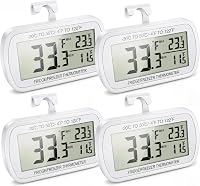
The Waterproof Digital Fridge Thermometer shows current, maximum, and minimum readings. It can stand on a shelf, hang from one, or attach to a magnetic surface, so it suits anyone who wants a simple visible check.
The TempPro Digital Fridge Thermometer, 2-Pack adds a backlit screen and records the maximum and minimum temperatures from the past 24 hours. Its two units suit homes that need checks in more than one cold-storage spot; skip the pair if you only need one display.
The GoveeLife WiFi Fridge Thermometer, 2-Pack includes a gateway and two sensors, with app notifications, email alerts, and a buzzer when a preset temperature range is exceeded. Choose it if remote monitoring matters; skip the connected setup if a local reading is all you need.
How do you set mini fridge temperature controls?
Start with the setting recommended in the manual, then make small changes and check the temperature again. The manual explains which direction makes your specific fridge colder and how long to wait before judging a change.
If the thermometer reads above 40°F, adjust the control a little colder. If items near the coldest area freeze, ease the setting warmer and check again after the temperature settles.
Change one thing at a time. Keep the door shut between readings, avoid adding warm food during the check, and give a new or recently moved fridge time to stabilize according to its instructions.
What affects a mini fridge's temperature?
Door use, airflow, placement, and the control setting can all affect the reading. Check these conditions before assuming the appliance needs repair.
- Frequent door openings let warm air in. Open the door briefly and close it fully.
- Crowded shelves can restrict cold air movement. Leave space around containers and avoid blocking vents.
- A poor location may make cooling harder. Follow the manual's placement and clearance instructions.
- Packages against the seal can stop the door closing fully. Rearrange items and check that the seal meets the cabinet.
- A setting that's too cold can freeze items near the coldest surface. Raise it gradually and monitor the temperature.
If ice keeps forming inside, see why a mini fridge gets ice buildup. Before choosing a spot or moving the appliance, read how to move a mini fridge safely.
Does the freezer need a different temperature?
Check the mini fridge manual for the freezer compartment's target and controls. Some models have a separate freezer setting, while others use one control for both sections.
The FDA's 40°F recommendation is for refrigerator storage. If you store frozen food, use the manual's freezer guidance and a suitable thermometer to check that compartment.
Some compact fridges have a chiller area instead of a true freezer. Check the appliance label and manual so you know what that section is designed to hold.
What common temperature mistakes should you avoid?
Use the thermometer reading to guide adjustments, and avoid changes that make the result hard to judge. A control number by itself doesn't tell you whether the fridge is cold enough.
Don't assume every numbered dial works the same way, or turn it to the coldest setting as a shortcut. Make a small adjustment, wait for the temperature to settle, and check again.
Don't pack the interior tightly, leave the door ajar, or repeatedly open it while checking. These habits can disrupt cooling and make readings less useful.
Don't keep perishable food in a fridge that remains above 40°F. Move it to a reliably cold refrigerator while you check the setting and setup.
Can temperature settings affect mini fridge power use?
Avoid setting the fridge colder than needed once it reaches the right temperature. Power use also depends on the model and how you use it, so the setting is only one factor.
For model-specific electrical details, see how many watts a mini fridge uses. If you're comparing appliances, our guide to what the Energy Star label means for mini fridges explains how to use that information.
Which thermometer should you choose?
Pick based on where you need to see the reading and whether you want alerts. A simple screen suits occasional checks, while remote monitoring helps when you can't check the fridge in person.
- Choose the VOULOIR if you want a large display with current and recorded high and low readings, plus flexible placement.
- Choose the TempPro if you need a backlit display or want two thermometers for separate cold-storage spots.
- Choose the GoveeLife if you want app and email alerts, a buzzer, and remote checks through its gateway and sensors.
A connected thermometer adds setup and depends on a working connection for remote alerts. If you don't need those features, a basic display is the more direct choice.
For a fridge used mainly for drinks, follow the appliance instructions and check that drinks don't freeze. For one holding perishable food, use 40°F as the ceiling and verify it with a thermometer.
How cold should a mini fridge be: what's the right choice?
Use 40°F or below as the food-storage target, then choose a thermometer that fits how you check the appliance. Pick the VOULOIR for a straightforward display, the TempPro for a backlit screen or two locations, and the GoveeLife for remote alerts.
If the temperature stays above 40°F after a careful adjustment, move perishable food elsewhere and check the manual's placement and troubleshooting steps. For help choosing a mini fridge in the first place, read our mini refrigerator buying guide.
Frequently asked questions
What temperature should a mini fridge be?
Keep a mini fridge at 40°F (4°C) or below if you store perishable food in it. The setting dial is only a control, so check the interior with an appliance thermometer.
If the reading stays above 40°F, adjust the control and check again after the fridge has had time to respond.
What number should I set my mini fridge to?
There isn't one reliable number for every mini fridge because control scales differ. Start with the manufacturer's recommended setting, then use an appliance thermometer to see whether the interior reaches 40°F or below.
Adjust gradually and recheck after the temperature settles.
Is 50°F cold enough for a mini fridge?
No. A mini fridge holding food should be at 40°F or below; 50°F is too warm for that target.
Check the temperature with an appliance thermometer, adjust the control as the manual directs, and move perishables to a reliably cold refrigerator if the mini fridge remains above 40°F.
How long should I wait after changing a mini fridge setting?
Give the fridge time to respond before judging a setting change. The wait depends on the model, how full it is, room conditions, and how often the door opens, so follow the manual and check the temperature again once it has stabilized.
Avoid repeated dial changes before each check.