Why Does My Mini Fridge Make a Popping Sound?
A popping sound in a mini fridge is usually normal. The compressor switching on and off, refrigerant equalizing in the lines, or plastic panels expanding and contracting cause most pops. Steady rattling, buzzing or repeated loud pops point to a problem worth checking.
On this page (8 sections)
- Why does my mini fridge make a popping sound when it starts?
- What else causes popping in a mini fridge?
- Is a popping mini fridge ever a real problem?
- How do you quiet a popping mini fridge?
- How can you tell whether the noise is normal?
- Does temperature affect popping sounds?
- When should you replace a popping mini fridge?
- What should you do about the popping sound?
A popping sound in a mini fridge is usually normal. The compressor switching on and off, refrigerant equalizing in the lines, or plastic panels expanding and contracting cause most pops.
A steady rattle, a buzz or repeated loud pops points to something worth checking.
Mini fridges are small, so every cycle change is easier to hear than in a full-size kitchen fridge. Most owners notice the noise most at night, when the room is quiet and the compressor kicks in.
Why does my mini fridge make a popping sound when it starts?
The compressor is the main source. When the thermostat calls for cold, the compressor motor starts and the refrigerant pressure changes quickly, which can produce a pop or click.
That start-up pop is the sound of the system doing its job. A mini fridge compressor can cycle several times an hour in a warm room, and each cycle can bring a small pop.
The thermostat switch itself also clicks as it opens and closes. In a quiet room, that click can sound like a pop coming from inside the cabinet.
None of these mean the fridge is broken. If the pops come only at the start and end of a cooling cycle, the unit is behaving normally.
What else causes popping in a mini fridge?
Refrigerant equalizing, plastic expansion and loose parts cover most of the other pops. Each one has a different sound and a different fix.
Refrigerant equalizing in the lines
When the compressor stops, pressure between the high and low sides of the system equalizes through the capillary tube. That rush of refrigerant can gurgle, hiss or pop.
The noise often comes from the back of the fridge, near the compressor. It may continue for a minute after the motor stops, then fade.
Plastic panels expanding and contracting
The inner liner and outer shell expand as the cabinet warms and shrink as it cools. Panels that rub against insulation or each other can pop as they move.
This is more common in new fridges and in warm rooms. The sound is light and irregular, not a hard mechanical click.
Loose parts and vibration
A pop that repeats with the compressor's hum is often a loose part. The drip tray, a shelf, a bottle or the fridge's own feet can vibrate against the cabinet.
Press gently on the sides and shelves while the fridge runs. If the pop changes or stops, you have found the source.
Ice and frost
Frost can form on the evaporator and then crack or drop as it melts. A pop followed by a trickle of water suggests this.
Check the freezer section for ice buildup in the mini fridge, which makes the popping worse.
Is a popping mini fridge ever a real problem?
Yes, in a few cases. A pop alone is not a fault, but a pop paired with other symptoms is worth investigating.
Cut the power and call a technician if you hear a loud bang, a burning smell or a pop followed by the fridge going silent and warm. Those point to an electrical or refrigerant problem, not normal cycling.
Repeated popping every few seconds is also unusual. That pattern suggests the compressor is short-cycling, often because the thermostat, the door seal or the ventilation is failing.
If the fridge pops and the sides feel very warm, read why a mini fridge is hot on the sides. Heat and noise together often mean poor airflow around the compressor.
How do you quiet a popping mini fridge?
Level the fridge, clear the space around it and stop loose parts from vibrating. Most pops get quieter with these three steps, and none of them costs much.
Level the fridge and steady the feet
An uneven fridge rocks slightly as the compressor runs, and that rocking turns into pops and rattles. Check with a spirit level and adjust the front feet until the cabinet sits flat.
A stand with leveling feet gives you more adjustment than the fridge's own feet. The {{product B0GX7XG6DN | Adjustable frame with four leveling feet and a built-in level, so the cabinet sits flat and stops rocking.}} fits mini fridges from 17 to 26 inches and supports up to 400 lb.
Add anti-vibration pads
Vibration travels from the compressor into the floor and back into the cabinet. A rubber pad under each foot breaks that path.
The {{product B0CQK5DY59 | Four rubber and EVA pads that absorb compressor vibration before it reaches the floor.}} each hold up to 960 lb and measure 4 x 4 x 7/8 inches. They also raise the fridge slightly, which helps air reach the base.
Clear the space around the cabinet
A mini fridge needs a few inches of air on the sides and back. When the compressor is boxed in, it runs longer and hotter, and the extra heat makes plastic panels expand and pop more.
Pull the fridge away from the wall and out of tight cabinet gaps. Keep the coils at the back clean and dust-free.
Stop loose items from rattling
Tighten shelves, trays and the drip pan. Move bottles away from the walls and keep the door bins from touching the shelves.
A small wedge under a rattling shelf can stop a pop that sounds mechanical.
Check the door seal
A seal that doesn't close fully lets warm air in, so the compressor cycles more often and pops more. Wipe the gasket and check for gaps with a sheet of paper.
A seal that is failing is one of the cheaper parts to replace.
How can you tell whether the noise is normal?
Track when the pop happens and what else happens with it. A short log of a day or two tells you more than a single listen.
| Sound | When it happens | Likely cause | What to do |
|---|---|---|---|
| Single pop or click | Start or end of a cooling cycle | Compressor or thermostat | Normal, no action |
| Gurgle or hiss | Just after the motor stops | Refrigerant equalizing | Normal, no action |
| Light crackle | As the room warms or cools | Plastic panels | Normal, may settle over time |
| Rattle with the hum | While the compressor runs | Loose part or vibration | Tighten parts, add pads |
| Repeated loud pops | Every few seconds | Short-cycling compressor | Check airflow and seal, call a tech |
| Bang and burning smell | Any time | Electrical or refrigerant fault | Cut power, call a technician |
Write down the time of each pop and the fridge's temperature at that moment. A fridge that holds its set temperature while popping is working as designed.
One that drifts warm has a cooling problem behind the noise.
Does temperature affect popping sounds?
Yes. Warmer rooms make mini fridges pop more.
A mini fridge in a warm garage or a sunny dorm room runs longer cycles, and longer cycles mean more expansion, contraction and refrigerant movement.
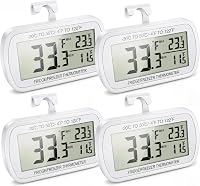
Keep the room between 60°F and 80°F if you can. Check the internal temperature with a thermometer so you know the fridge is still doing its job.
The {{product B07RLD198X | Digital display with max and min memory and a magnetic back that sticks to a fridge shelf.}} reads from -4°F to 122°F to within ±2°F.
Cold rooms bring the opposite problem. In a very cold space, the compressor may not run often enough to keep food safe, and the fridge may pop as it struggles to start.
When should you replace a popping mini fridge?
Replace it when the noise comes with poor cooling or repeated electrical trips. A pop on its own is not a reason to buy a new fridge.
Age matters too. Most mini fridges last about 5 to 10 years, so a unit near the end of that range with new noises is worth watching.
Our guide to how long a mini fridge lasts explains the signs.
Check for water as well. A pop followed by a puddle may come from a blocked drain or a failed seal.
See why a mini fridge is leaking water before you decide the fridge is finished.
If the cabinet stays cold and the pops only happen at cycle changes, keep using it. Repair or replace when the fridge stops holding temperature or the breaker trips more than once.
What should you do about the popping sound?
Start with the cheap fixes: level the fridge, add vibration pads, clear the space and check the seal. Most popping mini fridges get noticeably quieter after those steps.
If the pop continues and the fridge still cools well, accept it as normal. If it comes with a warm cabinet, repeated loud pops or a burning smell, cut the power and get professional help.
The practical order for most readers is a stand and leveling feet first, then anti-vibration pads, then a thermometer to confirm the fridge is still cold. A popping mini fridge that holds its temperature is doing its job, and the noise is just part of how small compressors work.
Frequently asked questions
How often should a mini fridge pop?
Expect a pop or click each time the compressor starts or stops, which can happen several times an hour in warm rooms. Constant popping every few seconds is not normal and usually means the compressor is short-cycling.
Does a mini fridge pop more when it is new?
Yes. New fridges often pop more in the first week as the plastic shell, insulation and interior panels settle and expand.
The noise usually settles down after that, though some creaking can continue in warm rooms.
Can I stop the popping sound at night?
You can quiet most pops by leveling the fridge, keeping it away from walls and putting a mat under the feet. If the compressor itself clicks loudly, move the fridge out of the bedroom rather than trying to silence it.