How to Stop a Mini Fridge From Freezing Food
The fix for a mini fridge that freezes food is usually the thermostat setting or airflow. Turn the dial down a notch, pull food away from the back wall and cold plate, and give the cabinet a day to settle before changing anything else.
On this page (9 sections)
- Why does a mini fridge freeze food in the first place?
- How do you check the real temperature inside?
- Which thermostat setting should you use?
- How does food placement cause freezing?
- What should you do if only some items freeze?
- Does the door seal or room temperature matter?
- When should you use a thermometer with an alarm or a watt meter?
- Should you replace a mini fridge that keeps freezing food?
- What is the quick fix for a mini fridge that freezes food?
The fix for a mini fridge that freezes food is usually the thermostat setting or airflow. Turn the dial down a notch, pull food away from the back wall and cold plate, and give the cabinet a day to settle before changing anything else.
Most mini fridges that ice up drinks or lettuce are running colder than they need to, and small changes in how you load and set the fridge solve the problem without a repair.
Knowing how to stop mini fridge from freezing starts with one check: what temperature is the cabinet actually holding? A thermometer takes the guesswork out of the dial and tells you whether the fridge is running cold or just cooling unevenly.
Why does a mini fridge freeze food in the first place?
A mini fridge freezes food when the thermostat calls for too much cooling or cold air collects in one spot. The cabinet is small, so a few degrees of overshoot turns into ice on your lunch.
Mini fridges have less insulation and less air volume than full-size refrigerators. A compressor that runs a little long chills the whole box quickly.
Many models also use a cold plate or an exposed evaporator at the back, and anything touching that surface can freeze even when the air around it is fine.
The dial is another factor. Numbers on a mini fridge dial are not degrees.
A setting of 5 or 6 often means the coldest position, so turning the dial up can make freezing worse. Owners sometimes assume a higher number means warmer, then wonder why their drinks turned to slush.
How do you check the real temperature inside?
Put a thermometer in the middle of the cabinet and read it after a few hours. That number tells you whether the thermostat or the airflow is the problem.
Set the fridge to its normal setting and leave the door closed. Place the thermometer on a middle shelf, away from the walls and the door.
Check it after several hours, then again the next morning.
Aim for 37°F to 40°F. If the reading sits near 32°F or below, the fridge is set too cold or cooling unevenly.
If the middle reads fine but your milk freezes at the back, the cold plate is the culprit and you need to move food forward.
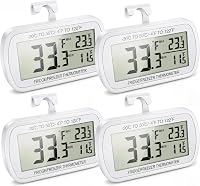
The VOULOIR thermometer shows the current, minimum and maximum temperature on one screen. That max and min record is useful here, because it catches the cold dips that happen overnight when nobody opens the door.
Which thermostat setting should you use?
Start at the middle of the dial and move one step warmer at a time. Wait a full day between changes so the cabinet can settle.
Turn the dial down one notch, not several. Mini fridges respond slowly, and jumping straight to the warmest setting can leave food too warm.
After 24 hours, check the thermometer again.
If the fridge still freezes food at the middle setting, go one more step warmer. If it never gets cold enough even at the coldest setting, the thermostat or the door seal needs attention.
Our guide to why a mini fridge is hot on the sides covers what normal heat from the compressor looks like.
Some models have a small freezer compartment with its own control or a flap. If your food is freezing in the main cabinet rather than the freezer box, check that the flap between the two sections is closed properly.
How does food placement cause freezing?
Food touching the back wall or cold plate freezes first, so leave a gap. Cold air also gets trapped when the cabinet is packed too tightly.
Keep about an inch of space between food and the back wall. Push milk, produce and drinks toward the front and middle shelves.
Don't stack containers against the cold plate or block the vent that moves air around the cabinet.
Don't overfill the fridge. A mini fridge needs some open space for cold air to circulate, and a crowded cabinet creates warm and cold pockets.
Take out bulky packaging and leave room around the shelves.
Use the door shelves for items that tolerate temperature swings, like condiments. Don't store lettuce or delicate produce in the door, where opening and closing changes the temperature most.
What should you do if only some items freeze?
Move the freezing items to a warmer shelf and keep them away from the walls. Partial freezing usually points to a cold spot rather than a bad thermostat.
Check where the cold air enters the cabinet. On many mini fridges it comes from the back or the top.
Items directly in that path chill fastest. Shift them to a middle shelf and leave the coldest zone for things you want cold, like sealed drinks.
If produce freezes but drinks don't, the produce may be sitting closer to the cold plate. If drinks freeze but food doesn't, the drinks may be against the back wall or the door shelf near the vent.
Our guide to mini fridge ice buildup explains how frost and ice on the walls make cold spots worse. Clearing that ice helps the cabinet cool more evenly.
Does the door seal or room temperature matter?
Yes, a poor seal and a hot room both make a mini fridge work harder and cool unevenly. Fixing the seal and moving the fridge out of direct sun help steady the temperature.
Check the door gasket for gaps by closing the door on a piece of paper. If the paper slides out easily, the seal isn't gripping.
Clean the gasket and check that the door closes squarely.
Keep the fridge out of direct sunlight and away from ovens, radiators and heating vents. A mini fridge in a hot garage or sunny dorm room runs its compressor longer, which can chill the cabinet more than the thermostat expects.
Don't block the vents around the cabinet. Mini fridges need air to move past the back and sides so the compressor can shed heat.
Our guide to how long a mini fridge lasts notes that constant overheating shortens the compressor's life.
When should you use a thermometer with an alarm or a watt meter?
A thermometer with a clear display helps you track the fix, and a watt meter shows whether the fridge is running longer than it should. Both are useful when the dial changes don't settle the problem.
The TempPro 2-pack has a large backlit screen and records the max and min temperature over the past 24 hours. The backlight makes it easy to read in a dark cabinet, and the max and min memory shows whether the fridge dipped toward freezing overnight.
The MECHEER plug-in watt meter measures power, energy, volts, amps and cost. If your mini fridge runs its compressor far more than expected after the door seal and settings are sorted, the meter gives you a number to work with.
It also has overload protection and a data memory function.
Should you replace a mini fridge that keeps freezing food?
Replace the fridge if the thermostat no longer responds to the dial or the cabinet keeps icing food after settings and airflow are fixed. At that point a repair usually costs more than a new unit.
A thermostat that runs cold no matter where the dial sits is the clearest sign. A fridge that ices over within days after you clear it is another.
So is an older unit that also runs hot or struggles to stay cold.
A fridge with no freezer compartment removes the risk of the freezer box chilling the main cabinet. Our roundup of the best mini fridges with no freezer lists models built as all-fridge cabinets.
For anyone learning how to stop mini fridge from freezing for good, that is the cleanest setup.
Before replacing, confirm the model's normal temperature range. If the fridge is fine but your food is in the wrong spot, moving it forward costs nothing.
What is the quick fix for a mini fridge that freezes food?
Turn the dial down one notch, move food away from the back wall and cold plate, and check the cabinet temperature after a day. That order fixes most freezing mini fridges.
If the fridge still freezes food after the dial and airflow changes, check the door seal and the room temperature next. A thermometer shows whether the cabinet is truly running cold or just cooling one corner.
If the thermostat ignores the dial entirely, a no-freezer model is the simpler replacement.
For most readers, the first step is the one that matters: set the fridge warmer and measure what happens. Everything else follows from that reading.
Frequently asked questions
Why does my mini fridge freeze everything on the lowest setting?
A mini fridge can run cold even on its warmest dial because the thermostat is aging, the dial is misread, or a cold plate sits right beside your food. Turn the dial down, move food away from the plate, and check the temperature with a thermometer before assuming the fridge is broken.
What temperature should a mini fridge be set to?
Aim for 37°F to 40°F in the cabinet, with frozen items kept in a true freezer compartment if your model has one. Much below 35°F and milk, lettuce and drinks start to ice up, so adjust in small steps and recheck after a few hours.
Can I stop a mini fridge from freezing without a thermometer?
You can turn the dial down and move food forward, but a thermometer tells you whether the change actually worked. A cheap fridge thermometer removes the guesswork and helps you spot a thermostat that keeps running cold.
Does a mini fridge freeze more when it is packed full?
A packed mini fridge can run colder near the back wall and cold plate because air cannot circulate. Leave a little space around food and keep items away from the plate so cold air reaches the whole cabinet evenly.