How to Defrost a Mini Fridge
To defrost a mini fridge, unplug it and let the frost melt, then wipe up the water and dry the interior. Plan for about 2 hours of thawing and a couple more hours for the cabinet to chill before food goes back in.
On this page (12 sections)
- How do you defrost a mini fridge step by step?
- What should you prepare before you start?
- How long does it take to defrost a mini fridge?
- How do you keep food cold while it defrosts?
- How do you loosen the frost without damaging the fridge?
- How do you deal with the meltwater?
- What should you clean while the fridge is empty?
- How do you restart the fridge and refill it safely?
- How can you slow frost buildup so you defrost less often?
- Does a fridge stand help with defrosting?
- When is it time to replace the fridge instead?
- What's the bottom line on how to defrost a mini fridge?
To defrost a mini fridge, unplug it and let the frost melt on its own, then wipe up the water and dry the inside before restarting. Plan on about 2 hours of thawing and another 2 to 3 hours for the cabinet to chill again.
The job is simple, but the order matters. Get your food into cold storage first, then let the ice do the work so you don't chip the liner.
How do you defrost a mini fridge step by step?
Empty it, unplug it, thaw it, dry it, and chill it is the whole sequence. There's no drain on most mini fridges, so water management is the part that needs planning.
- Move all food to another fridge or a cooler with ice.
- Switch the fridge off and pull the plug, then remove shelves and drawers.
- Leave the door open and let the frost melt into towels.
- Wipe the liner and the door seal, then dry everything.
- Plug it back in, close the door, and let it reach temperature.
- Refill once the interior is cold again.
Start early in the day so the fridge has time to recover. A half-empty fridge thaws faster than a packed one, which makes this a good moment to sort out old items.
What should you prepare before you start?
Have cold storage and plenty of towels ready before you open the door. A shallow tray or a drip mat under the fridge saves the floor from meltwater that runs out along the bottom edge.
Clear the space in front of the unit so you can reach the shelves and the back wall. Move rugs and boxes away from the base.
Check whether your model has a small freezer box or just a chilled compartment. That decides how much ice you'll be dealing with and how long the thaw will take.
How long does it take to defrost a mini fridge?
Expect about 2 hours for a light frost layer. A compact freezer compartment packed with ice can take 4 hours or more, depending on room temperature.
Warm rooms speed melting and cold rooms slow it. Setting a bowl of warm water on a shelf and closing the door traps the heat and softens ice faster without any risk to the liner.
Don't rush the job by hacking at the ice. The savings in time are small compared with the cost of a punctured liner or a damaged cooling line.
Once the ice is gone, the restart is the longer wait. An empty mini fridge usually needs 2 to 3 hours to reach its set temperature, so time the job around your shopping trips.
How do you keep food cold while it defrosts?
Move food to another fridge first. If you don't have one, pack everything tightly into a cooler with ice or frozen packs and keep the lid shut.
Keep the cooler in a cool, shaded spot rather than next to a warm oven or a sunny window. Grouping items close together helps them hold the cold.
Food held above 40°F for more than 2 hours should be thrown out. When in doubt, discard it; the cost of replacing a few items is lower than the risk of food poisoning.
The USDA's food safety guidance on refrigerator thermometers and food safety explains the 40°F limit.
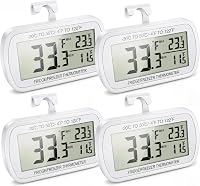
A thermometer helps you know your food stayed safe
A WiFi thermometer takes the guesswork out of the cool-down and the food safety check. The GoveeLife 2-pack pairs two slim sensors with one gateway, so you can watch the fridge from your phone.
Its probe reads within ±0.9°F and responds in about 2 seconds across a -40°F to 158°F range. The gateway handles up to 10 sensors within about 230 ft.
The sensors are magnetic or hang from a lanyard, and the flat cable fits against the door seal. A buzzer sounds if temperatures leave your set range.
How do you loosen the frost without damaging the fridge?
Let the ice melt on its own, or use warm water to speed it up. Never use a knife, ice pick or metal scraper on a mini fridge liner.
Plastic scrapers are only safe on loose frost that has already lifted from the wall. Even then, keep the blade flat and stop before you press hard.
Never use a hair dryer or a heat gun. Water plus electricity near an open appliance is the real danger, and a hot blast can warp plastic trim.
The one shortcut worth using is a bowl of warm (not boiling) water set on a shelf with the door closed. Repeat it as the water cools.
How do you deal with the meltwater?
Catch the water with towels, a tray or a drip mat, because most mini fridges have no drain plug. Line the bottom of the cabinet with an old towel and swap it before it soaks through.
Water can run out under the door and pool on the floor. A silicone mat under the whole unit keeps that water off wood and carpet.
A drip mat protects the floor under the fridge
The ieesspd 24-inch silicone mat gives meltwater somewhere to go other than your floor. Its raised edges hold water that would otherwise reach your floor.
The mat measures 24 x 24 x 0.5 inches and fits under most mini fridges. The soft silicone wipes clean with a cloth and won't scratch the floor.
Check the clearance under your fridge door before you slide the mat in place. The edge is 0.5 inches high, so measure the gap from the door bottom to the floor first.
It's most useful on hard floors and in humid rooms.
What should you clean while the fridge is empty?
Wipe the liner, shelves, drawers and door seal while everything is out. This is the easiest moment to remove spills and crumbs that have been hiding behind jars.
Use a mild dish soap solution or a cleaner your manual allows, and avoid abrasive pads. Rinse with a damp cloth so no soap residue stays on the surfaces.
Wash removable shelves and drawers in the sink. Dry them fully before they go back in, since trapped moisture just becomes frost again.
Check the door seal for sticky residue or food bits. A clean seal closes better and keeps cold air where it belongs.
For more on airflow and warmth, see why a mini fridge is hot on the sides.
How do you restart the fridge and refill it safely?
Plug it in, close the door and let it run empty until the interior reaches its normal setting. A mini fridge typically needs 2 to 3 hours to chill after a full defrost.
Don't load warm groceries into a warm cabinet. Wait until it's cold, then refill in groups so the temperature stays stable.
Spread items out rather than packing them tight. Good airflow around the shelves helps the fridge recover faster and frost more evenly.
Check the temperature with a thermometer before adding dairy or meat. If the fridge won't cool after restarting, look at the seal and the plug before assuming it's broken.
How can you slow frost buildup so you defrost less often?
Keep the door closed as much as possible and wipe up spills before they freeze. Frost comes from moisture in the air and from wet containers.
Let leftovers cool before they go in. A warm pot releases steam that settles on the cold walls and turns to ice.
Keep the door seal clean and check that it closes fully. A seal that doesn't sit flat lets humid room air in all day.
Don't overfill the freezer box, since a packed compartment blocks airflow and builds frost faster.
For a fridge without a freezer section, there's less ice to deal with. If you're buying new and want to skip defrosting, compare mini fridges with no freezer, which chill without a freezing compartment.
Does a fridge stand help with defrosting?
Yes, a little height makes the job easier and the floor drier. Lifting the fridge clears space to slide a towel or mat underneath and lets air move around the base.
The Qoarxui stand adjusts from 17 to 26 inches in length and width and from 4 to 5 inches in height. It holds up to 400 lb on stainless steel tubes.
Leveling feet keep the unit steady on uneven floors and carpet. Clear scale markings and a built-in level help you set the size.
Skip it if your fridge already sits on a built-in base or in a tight cabinet.
When is it time to replace the fridge instead?
Replace it when defrosting no longer fixes the problem. Heavy frost that returns within weeks, a fridge that won't hold temperature or a liner that's already cracked are all signs the unit is near the end.
Think about age first. A mini fridge that's 8 to 10 years old and failing costs more to repair than to replace.
Our guide to how long a mini fridge lasts walks through the usual lifespan and the signs it's time to swap.
If you're moving the old unit out, defrost and dry it first, then follow our steps on how to move a mini fridge so the compressor settles safely.
What's the bottom line on how to defrost a mini fridge?
Defrosting a mini fridge comes down to patience, not tools. Unplug it, move the food to cold storage, let the frost melt with the door open, catch the water and dry the inside fully before restarting.
A thermometer tells you when the cabinet is cold enough to refill, and a drip mat or stand keeps the meltwater off your floor. Skip the knife and the hair dryer; they cause more damage than the frost ever does.
Defrost when the ice reaches about 0.25 inch, usually every few months. Clean the seal while the fridge is empty, and it will frost more slowly next time.
Frequently asked questions
Should I unplug the mini fridge before defrosting?
Yes. Unplug it and empty it first.
Many mini fridges have no defrost cycle or drain, so the only safe way to clear ice is to let it melt while the unit is off and the door is open.
Can I use a hair dryer or a knife to speed up defrosting?
No. A hair dryer brings water and electricity close together, and a knife or ice pick can puncture the liner or the coolant lines.
Let the frost soften on its own, or set a bowl of warm water inside and close the door.
How often should I defrost a mini fridge?
Defrost when the frost layer reaches about 0.25 inch. That's usually every 3 to 6 months in a unit with a small freezer compartment.
Fridges without a freezer section often go longer, sometimes a year or more.
Do I need to defrost a frost-free mini fridge?
No. A frost-free mini fridge runs its own cycle and clears ice automatically.
Manual-defrost models, and the small freezer boxes in compact fridges, still need the full unplug-and-thaw routine.