What to Keep in a Mini Fridge
Keep drinks, dairy, eggs, fresh produce and cooled leftovers in a mini fridge, and use the small freezer shelf for ice and frozen basics. Skip warm food, open cans and anything that needs a steady deep freeze.
On this page (9 sections)
- What foods belong in a mini fridge?
- What should go on the freezer shelf?
- What should stay out of a mini fridge?
- How do you arrange shelves so food stays cold?
- How cold should it be for the food you keep?
- How do you keep food fresh in a small fridge?
- What maintenance keeps the inside usable?
- What should you keep in a mini fridge for a dorm or office?
- The bottom line on stocking a mini fridge
Keep drinks, dairy, eggs, fresh produce and cooled leftovers in a mini fridge, and use the small freezer shelf for ice and frozen basics. Skip warm food, open cans and anything that needs a steady deep freeze.
A compact fridge works best when you stock it on purpose. The cabinet is small, the cold air has less room to move, and the freezer shelf is tiny, so what to keep in a mini fridge comes down to foods that chill well and fit the shelves you have.
What foods belong in a mini fridge?
Drinks, dairy, eggs and ready-to-eat foods are the core stock. These are the items people reach for most, and they handle the small temperature swings of a compact cabinet well.
- Canned and bottled drinks: water, soda, juice and iced tea chill fast and fill shelf gaps.
- Dairy: milk, yogurt, cheese and butter stay fresh at fridge temperatures.
- Eggs: store them in their carton on a lower shelf, not the door.
- Fresh produce: berries, grapes, cut vegetables, lettuce and apples hold up in the cool air.
- Condiments: small bottles of mayo, mustard, salsa and salad dressing fit the door trays.
- Leftovers: cooked food that has already cooled, sealed in shallow containers.
The Upstreman 1.7 Cu Ft Mini Fridge With Freezer runs from 33.8°F to 46.4°F across 5 settings. That range covers safe chilling for these everyday foods, and its compact freezer holds ice cubes and small frozen items.
Shelf room is the real limit, so plan by footprint. At 17.7 inches deep, 18.9 inches wide and 19.3 inches high, the cabinet is sized to sit on a counter or under a desk.
Tall bottles take the door or the top shelf, while flat containers stack better on the lower shelves. A 1.7 cu ft cabinet rewards square tubs and short jars over bulky bags.
What should go on the freezer shelf?
The freezer shelf is for ice, frozen snacks and small portions, not a week of frozen meals. It sits at the top of a compact cabinet and shares cooling with the fridge below.
Good candidates include an ice cube tray, a few frozen burritos, frozen fruit for smoothies and single portions of meat you plan to cook soon. Skip ice cream here, since the brand states this temperature range is not for storing ice cream.
Skip large frozen pizzas, family-size bags of frozen vegetables and anything that needs a deep, steady freeze. Upstreman notes its fridge range is not for storing ice cream, so treat the freezer as a short-term chill zone rather than a true deep freeze.
The freezer is configured freezer-on-top, which is why it takes the coldest spot. That also means cold air drops from it into the fridge section, so leave a little room around frozen items.
A freezer stuffed to the edge blocks that flow and pushes the fridge shelves warmer than the dial says.
What should stay out of a mini fridge?
Leave out warm food, open cans, hot drinks and items that hate cold. A mini fridge has limited cooling power, so anything that adds heat makes the compressor work harder.
Wait for cooked food to cool to room temperature before it goes in. An open can of food should be moved to a sealed container, since the metal can transfer a taste and the contents spoil faster once opened.
Some foods do better outside the cold: whole potatoes, onions, garlic, tomatoes and bananas. Bread also stales faster in the fridge.
Keep those in a cupboard or on the counter and save the shelf space for food that really needs chilling.
If you want to know why the cabinet behaves the way it does, our guide to how a mini fridge cools explains the compressor cycle in plain terms.
How do you arrange shelves so food stays cold?
Put the coldest, most perishable items low and keep space at the back for air to move. Cold air sinks, so the lower shelves and the back of the cabinet run cooler than the door.
Lower shelves
Milk, yogurt, raw meat in a sealed container and leftovers go here. This is the coldest steady spot in most compact fridges and the safest place for anything that spoils quickly.
Door trays
The door is the warmest zone because it swings into room air. Use it for condiments, soda, water and butter, not for milk or eggs.
The Upstreman has 2 door shelves, which is enough for a row of small bottles and jars. The door is also reversible, so you can hang it on whichever side keeps the trays away from a wall or a desk leg.
Top shelf and freezer
The lower shelves stay coldest in the fridge section because cold air sinks from the freezer above. Use it for cheese, deli items and anything you want extra cold.
Ice trays and frozen snacks sit in the freezer itself.
Don't pack the cabinet solid. Leave roughly a quarter of the space open, and keep a gap between food and the back wall so cold air can reach every shelf.
How cold should it be for the food you keep?
Set the fridge between 34°F and 40°F for everyday food safety. That range keeps dairy and leftovers cold without freezing produce near the back.
Many compact fridges run a little warmer than full-size models, especially when the door opens often. Check the actual temperature with a thermometer rather than trusting the dial.
Our guide to how cold a mini fridge should be walks through the safe range and how to adjust the settings.
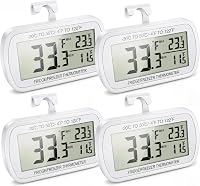
Place the thermometer on a middle shelf, away from the back wall and the door. The VOULOIR unit reads from -4°F to 122°F with a 2.56 inch LCD, and its max/min memory shows how warm the cabinet got between checks.
Its magnetic back and stand let you park it wherever it reads best. The reading updates in about half a second with 0.2°F resolution, so a quick glance after closing the door tells you whether the cabinet held its cold.
How do you keep food fresh in a small fridge?
Seal everything, keep the door shut and don't overstock. Small cabinets recover temperature slowly, so every open container and every extra door swing costs cold air.
- Store leftovers in shallow, sealed containers so they chill through quickly.
- Wrap cheese and cut produce to stop them drying out.
- Wipe up spills right away so they don't freeze onto shelves or drip to the floor.
- Check the door seal for crumbs and wipe it clean.
- Shop in smaller amounts so food doesn't sit forgotten at the back.
The Upstreman runs at 38 dB, which is quiet enough for a bedroom or dorm. That quiet operation only holds if the door closes fully, so keep the seal clear and the shelves not overloaded.
A glossy finish like this one is also easy to wipe, so a weekly pass with a damp cloth keeps the cabinet from picking up food smells.
What maintenance keeps the inside usable?
Defrost when frost builds up, and catch drips before they reach the floor. The Upstreman uses manual defrost, so a layer of ice on the freezer shelf needs clearing now and then.
Its included defrost tool helps loosen frost without scraping hard at the liner. Empty the freezer, let frost soften, wipe the interior dry and let the cabinet cool again before restocking.
Our guide on how to move a mini fridge covers safe handling if you ever need to relocate the unit for cleaning or a move.
The ieesspd mat measures 24 x 24 x 0.5 inches with raised edges that hold spilled water. It suits readers who keep a mini fridge on wood floors or carpet, where a slow drip leaves a mark.
Check the gap under your door before sliding it in place, since the mat adds half an inch of height. A mat this size also reaches past the cabinet footprint, so it doubles as a tidy base for a washing machine or wine cooler set beside the fridge.
What should you keep in a mini fridge for a dorm or office?
Stock drinks, easy snacks and a few fresh basics that you'll actually eat. A dorm or office fridge is a convenience cabinet, so load it with what you reach for daily.
Water bottles, soda, yogurt cups, string cheese, fruit, sandwich supplies and sealed leftovers cover most needs. Keep raw meat out of a shared office fridge unless you'll cook it the same day.
Label your food, and clear out anything past its date at the end of each week.
Energy use matters too in a small room. A compact fridge like the Upstreman uses as little as 0.5 kWh per day according to the brand, and its 204 kWh annual figure works out to a small draw on a dorm circuit.
Its R600a refrigerant has no ozone depletion potential and a lower global warming potential than older types. Our guide to how many watts a mini fridge uses helps you plan the load on a dorm outlet.
The bottom line on stocking a mini fridge
Fill a mini fridge with drinks, dairy, eggs, fresh produce and cooled leftovers, and keep the freezer shelf for ice and small frozen items. Leave warm food out, seal everything and keep a little open space for airflow.
Check the temperature with a thermometer, clear frost when it builds and wipe up drips before they reach the floor. That routine keeps the food you choose cold and the cabinet easy to live with.
For everyday safety, remember what to keep in a mini fridge comes down to foods that chill well and fit the shelves you have, so stock small and restock often.
Frequently asked questions
Can I put warm food straight into a mini fridge?
No. Let cooked food cool to room temperature first, then chill it.
Warm dishes raise the interior temperature fast in a small cabinet, and a 1.7 cu ft fridge has little spare cooling power to pull that heat back down.
Does a mini fridge freezer keep ice cream solid?
Not reliably. The freezer shelf on a compact model is small and sits close to the fridge compartment, so it holds ice cubes and frozen snacks better than a full tub of ice cream.
Check your model's stated freezer temperature before relying on it.
Where should I put milk and eggs in a mini fridge?
Keep milk and eggs on the lower shelves, away from the freezer shelf. Cold air sinks, so the bottom stays steadiest.
Avoid the door for milk if the fridge is opened often, since door shelves swing through warmer room air.
How full should a mini fridge be?
Leave some open space so cold air can move around. A packed cabinet blocks airflow and creates warm pockets.
Fill roughly three quarters of the space and keep a gap at the back wall so air can circulate.
Can I store medicine in a mini fridge?
Only if the label says refrigeration is required and the fridge holds a steady temperature. Mini fridges swing more than full-size units, especially when the door opens.
Use a thermometer and check with a pharmacist before storing anything temperature-sensitive.
Is it safe to keep raw meat in a mini fridge?
Yes, if you keep it on the lowest shelf in a sealed container and cook it within a day or two. Raw meat drips can contaminate food below, so never store it above ready-to-eat items.
A small fridge fills up fast, so buy meat in portions you'll use quickly.