How Does a Mini Fridge Cool?
A mini fridge cools by pumping heat out of the cabinet and releasing it into the room. A compressor squeezes a refrigerant gas, coils and fans move the heat outside, and the cold side pulls warmth from your food.
On this page (11 sections)
- What parts make a mini fridge cool?
- How does the compressor cycle actually cool the food?
- How does the cold air move around the cabinet?
- Why does the back of a mini fridge feel warm?
- How does the thermostat set the temperature?
- Why does a mini fridge have a freezer box or chiller?
- How do you help a mini fridge cool better?
- How can you tell the fridge is cooling correctly?
- Where should a mini fridge go so it cools well?
- What makes a mini fridge stop cooling?
- What should you expect from mini fridge cooling?
A mini fridge cools by moving heat out of the cabinet instead of making cold from nothing. A compressor pressurizes a refrigerant gas, the coils and fans release the heat into your room, and the inside surface pulls warmth from the food and air.
That loop runs on electricity and repeats on a thermostat cycle. Once you know the parts, the odd habits of a small fridge, like a warm back and a quiet pause, make sense.
What parts make a mini fridge cool?
Four parts do the cooling work: the compressor, the condenser coils, the expansion valve and the evaporator. They form a sealed loop filled with refrigerant.
The compressor is the pump at the back or bottom. It squeezes the refrigerant gas, raising its pressure and temperature.
The hot gas then travels to the condenser coils on the back panel, where a fan or plain air movement lets it shed heat into the room.
Next, the refrigerant passes through a narrow expansion valve. The pressure drops sharply, and the gas turns cold.
That cold refrigerant flows through the evaporator, the plate or coil inside the cabinet, and absorbs heat from the food and air around it.
The warmed refrigerant returns to the compressor and the cycle starts again. The Midea 1.6 Cu Ft Mini Fridge runs this compressor method on R600A refrigerant.
How does the compressor cycle actually cool the food?
The compressor runs until the thermostat says the cabinet is cold enough, then switches off. During the pause, the cold evaporator keeps pulling heat from the food, and the compressor restarts when the temperature rises.
This on and off pattern is why a mini fridge is never silent for long. A small fridge has less insulation and less cold air than a full kitchen fridge, so warm food or an open door raises the inside temperature quickly and triggers the compressor sooner.
The compressor is the loudest part of the cycle. Midea says this model stays under 42dB, which is about the level of a quiet conversation.
Most of the noise comes from the start and stop, not the steady run.
How does the cold air move around the cabinet?
Cold air sinks and warm air rises, so most mini fridges rely on natural circulation plus a small fan. The evaporator usually sits at the top or back, and the chilled air drifts down over the shelves.
If you pack food tight against the back wall or block the shelf gaps, the cold air can't reach the front. Leave a little space around packages and keep the glass shelf from being crowded.
A fridge with a small freezer box, like the Midea model, has a chiller section that gets colder than the rest. That box cools drinks faster because the cold surface is close to the can or bottle.
Why does the back of a mini fridge feel warm?
The warmth on the back is the heat that came out of your food. It's not a fault; the condenser coils and compressor are doing their job of dumping heat into the room.
This matters when you place the fridge. A mini fridge in a closed cabinet or tight corner has nowhere to release that heat, so the compressor runs longer and the fridge uses more power.
Our guide to how many watts a mini fridge uses explains what that extra run time costs.
The Midea model uses 207 kWh per year and is ENERGY STAR certified. Leaving a gap behind and beside the cabinet helps it hit that figure more closely.
How does the thermostat set the temperature?
The thermostat senses the cabinet temperature and tells the compressor when to run. A mechanical dial, like the one on the Midea, changes the target temperature rather than switching the fridge on directly.
Midea says the adjustable thermostat holds the chilled section from 28.4°F to 35.6°F (-2°C to 2°C). Turning the dial colder makes the compressor run longer, not instantly colder.
The change takes time to show.
If the fridge never seems to settle, a thermometer gives you a real reading instead of guessing from the dial. Our guide to how cold a mini fridge should be covers safe fridge ranges for food and drinks.
Why does a mini fridge have a freezer box or chiller?
The small box at the top is the coldest spot in the cabinet, and it uses the same compressor loop. It's where the evaporator is concentrated, so it can hold ice or chill a drink faster than the main shelves.
Not every mini fridge has one. Some are fridge-only, and the cold plate is spread across the back wall instead.
A chiller box is useful, but it takes shelf height away from taller items.
The Midea model has an internal freezer configuration and a 2L bottle rack in the door. Reversible doors and a removable glass shelf let you rearrange the space when the chiller box gets in the way of a tall bottle.
How do you help a mini fridge cool better?
Give it airflow, a level base and a steady power supply. Those three things let the compressor cycle normally instead of running flat out.
- Leave a gap at the back and sides so condenser heat can escape.
- Keep the fridge off carpet and out of direct sun.
- Don't overfill it; cold air needs room to move.
- Let warm food cool before it goes in.
- Close the door firmly and check the seal.
A fridge stand lifts the cabinet off the floor and helps air reach the base. The Adjustable Mini Fridge Stand With Leveling Feet adjusts from 17 to 26 inches and holds up to 400 lb, with a built-in level.
If you need to shift the fridge to a new spot, read how to move a mini fridge first. Lying it down can push oil into the lines, and it needs time upright before you plug it back in.
How can you tell the fridge is cooling correctly?
Check the actual temperature with a thermometer rather than trusting the dial. A fridge that feels cold can still be too warm for food, and the chiller box can mislead you about the shelves.
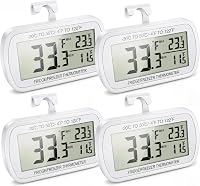
The Waterproof Digital Fridge Thermometer shows current, minimum and maximum readings on a 2.56 inch LCD. It has a magnetic back and a stand, so it can sit on a shelf or cling to the door.
Its range runs from -4°F to 122°F with accuracy of ±2°F. Put it in the middle of the cabinet, away from the back wall, and read it after the fridge has run for a few hours.
If the number drifts upward, check the door seal and the gap behind the cabinet before calling for service.
Where should a mini fridge go so it cools well?
Place it in a spot with airflow and a moderate room temperature. A mini fridge in a hot garage or a sealed cabinet struggles to dump heat and cools poorly.
Keep the back clear of the wall and don't tuck it into a closed cupboard. A bedroom corner works if the room stays reasonable and the fridge has breathing room.
Our guide to whether mini fridges are safe in bedrooms covers placement and electrical points to check.
Level the fridge so the door closes on its own and the seal sits flat. A wobbling cabinet lets warm air creep in around the gasket.
What makes a mini fridge stop cooling?
A fridge stops cooling when the compressor, the thermostat, the fan or the refrigerant loop fails. A blocked vent or a door left open can mimic a breakdown.
Start with the simple checks. Confirm the outlet works and the dial isn't set to off.
Listen for the compressor; if it hums and stops quickly, the thermostat or the start relay may be the cause.
Clean the coils at the back if they're dusty. If the back stays cold and the inside stays warm, the refrigerant may have leaked, and that needs a technician.
What should you expect from mini fridge cooling?
Once you know how a mini fridge cools, the rules get simple. Give it airflow, keep it level, and read the real temperature instead of the dial.
A compressor fridge like the Midea model will cycle on and off all day, and that's normal.
Pick the Midea 1.6 Cu Ft Mini Fridge if you want a compact compressor cabinet with a chiller box. Add the digital thermometer to confirm the shelves hold a safe temperature.
Use the adjustable stand if your floor is uneven or the base needs more airflow. Together they help the cooling loop do its job with less strain.
Our score weighs specs, features and buyer feedback against what you're shopping for.
Frequently asked questions
How does a mini fridge cool without a freezer?
It uses the same compressor loop, just tuned for one cold zone. The evaporator sits against the fridge compartment and the thermostat holds a fridge-safe range, so there's no separate freezing section to chill.
Can a mini fridge cool if it is lying on its side?
Not safely straight away. Lying it down can move oil into the refrigerant lines, so stand it upright and let it settle before plugging it in, as covered in our moving guide.
How long does a mini fridge take to get cold?
Most small fridges reach their set temperature within a few hours of being switched on. A warm room, a full load of room-temperature drinks and frequent door openings all add time.
Does a mini fridge need space behind it to cool?
Yes. The back is where heat leaves the cabinet, so leave a gap around the rear and sides.
Blocking airflow there makes the compressor work longer to hold the same temperature.