Is a Mini Fridge a Major Appliance?
No, a mini fridge is not a major appliance. Most mini fridges count as small appliances, like a microwave or coffee maker, even though they use a compressor and draw more power than a phone charger.
On this page (9 sections)
- What makes an appliance "major"?
- Is a mini fridge a major appliance under common definitions?
- How does the answer change for renters and leases?
- Does renters insurance treat a mini fridge as a major appliance?
- Does a mini fridge need a special electrical circuit?
- How much power does a mini fridge use compared with major appliances?
- Where should you place a mini fridge so it works well?
- What size mini fridge suits a dorm or office?
- Bottom line
No, a mini fridge is not a major appliance. Most mini fridges count as small appliances, the same broad group as a microwave, toaster or coffee maker, even though they have a compressor and use more electricity than a phone charger.
That label matters more than it sounds. It decides how renters insurance treats the fridge, what a lease allows, and whether you can move the unit without help.
The sections below walk through each of those points and end with the supplies that make ownership easier.
What makes an appliance "major"?
An appliance is called major when it's large, heavy, built in, or wired into the home, and a mini fridge meets almost none of those tests. A full-size refrigerator, oven, range, dishwasher or washer is major because it's big, usually fixed in place, and often needs a dedicated circuit or plumbing.
A mini fridge is compact, freestanding, and plugs into a standard outlet. It runs on the same kind of cord and plug as a toaster.
In most stores and home inventories it sits in the small-appliance aisle, not with the kitchen suites.
The one gray area is a built-in under-counter fridge. If a model is installed into cabinetry with trim and wiring, some people treat it as part of the kitchen.
A freestanding unit like the Midea 1.6 Cu Ft Mini Fridge, at 1.6 cu ft and 18.6 in wide, is clearly movable and clearly small.
Is a mini fridge a major appliance under common definitions?
No, the common definition puts it in the small-appliance group. A major appliance is typically defined as a large machine that performs a major household function and is often installed rather than moved.
Mini fridges are sold as compact refrigerators and treated as portable appliances. They don't require installation, plumbing or a dedicated breaker.
You can carry most of them upstairs yourself and unplug them in seconds.
There's no single official list everyone uses. Retail categories, insurers, landlords and building codes each draw the line a little differently.
The practical answer is the same across all of them: a mini fridge is small enough and movable enough to sit outside the major-appliance class.
That's why the question "is a mini fridge a major appliance" comes up so often in dorm, rental and office settings. People aren't asking about a legal category.
They're checking whether the fridge triggers a rule.
How does the answer change for renters and leases?
For renters, the label usually decides who owns the fridge and who fixes it. A major appliance that came with the apartment, like the main refrigerator, is normally the landlord's responsibility.
A mini fridge you brought in is your property.
Check the lease for rules on extra appliances. Some leases limit how many plug-in appliances you can add or require notice before installing one.
Many dorm and residence hall rules also set limits on fridge size, often measured in cubic feet.
A mini fridge is freestanding and doesn't change the building's wiring or plumbing, so it rarely counts as an alteration. That means you can usually unplug it and take it with you when you leave.
If the lease lists appliances that must stay, read the wording carefully before you move out.
Our guide to how to move a mini fridge covers the safe way to empty, secure and carry one when you relocate.
Does renters insurance treat a mini fridge as a major appliance?
Usually not. Most renters policies cover a mini fridge as personal property, alongside your furniture and electronics, rather than as part of the building.
That's good news: it's typically covered under your contents coverage, not the landlord's policy.
The catch is the deductible. A small fridge is often worth less than the deductible, so a claim may not be worth filing.
Contents coverage also has limits per category, and large appliances may fall under separate sub-limits.
If the mini fridge belongs to the landlord, it's usually part of the building coverage instead. Ask your insurer how it classifies a compact refrigerator before you rely on either policy.
Keep a receipt or photo of the unit so a future claim is simple.
Does a mini fridge need a special electrical circuit?
No. A mini fridge runs on a standard 120 volt outlet and doesn't need a dedicated circuit.
Its current draw is far below what a range, dryer or central air unit pulls.
Still, treat it as a real electrical load. Compressors draw a startup surge when they kick on, then settle to a steady draw while running.
If the outlet already feeds a space heater, hair dryer or kettle, the breaker can trip when both run at once.
Use a grounded outlet and avoid daisy-chained power strips for a long-term setup. Keep the cord clear of walkways and don't run it under a rug.
If the breaker trips repeatedly, move the fridge to another circuit or call an electrician.
Our guide to how many watts does a mini fridge use breaks down the running and startup numbers for typical compact models.
How much power does a mini fridge use compared with major appliances?
A mini fridge sits between a small appliance and a full-size fridge on the energy scale. The Midea 1.6 Cu Ft Mini Fridge is ENERGY STAR certified and rated at 207 kWh per year, which is a fraction of what a full-size refrigerator uses.
That rating comes from the compressor and insulation working together. Our explainer on how does a mini fridge cool covers the cycle in plain terms.
The short version: the compressor moves refrigerant through coils, and the cabinet holds the cold.
The power number matters when you plan a room. A full-size fridge may need a dedicated circuit; a mini fridge does not.
It also matters for dorm and office rules, where limits are often set by watts or amps rather than by appliance class.
A plug-in watt meter takes the guesswork out of it. The Plug-In Watt Meter With LCD Display reads power, energy, volts, amps and cost, and stores the last reading when you unplug it.
Where should you place a mini fridge so it works well?
Put it on a level, hard surface with space around the back and sides. A mini fridge releases heat from its coils, so airflow behind the unit matters more than the room's size.
Keep it out of direct sun and away from ovens, radiators and heating vents. Heat forces the compressor to run longer and can push the cabinet above its set temperature.
A closet with the door shut is a poor spot for the same reason.
Leave a few inches of clearance at the back and sides so air can move. Don't block the vent with boxes, curtains or bedding.
On carpet, a stand lifts the fridge so the base and coils stay clear.
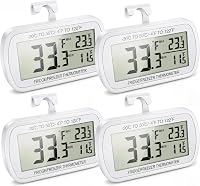
Set the thermostat and give the cabinet time to settle. Our guide to how cold should a mini fridge be explains the usual range and how to check it with a thermometer.
When does a stand help?
An adjustable stand helps when the fridge sits on carpet, on an uneven floor, or under a counter where moisture collects. It raises the base so air can move underneath and makes the unit easier to level.
The Adjustable Mini Fridge Stand With Leveling Feet fits frames from 17 to 26 inches in length and width and adjusts from 4 to 5 inches in height. It supports up to 400 lb and includes a built-in level for setup.
Measure your fridge's footprint before you buy, since the frame adjusts within that 17 to 26 inch range. Skip the stand if the fridge already sits level on a hard floor with clear airflow.
What size mini fridge suits a dorm or office?
A 1.6 to 2.5 cu ft model fits most dorm and office rules and holds drinks plus a little food. Larger compact fridges hold more but take up floor space and may exceed building limits.
The Midea 1.6 Cu Ft Mini Fridge measures 18.6 in wide, 17.7 in deep and 19.4 in tall, so it fits beside a desk or under many counters. It has a reversible door, a removable glass shelf and a small chiller box for faster cooling.
Midea says it runs at less than 42 dB, which is quiet enough for a bedroom.
Check the room's rules on fridge size and count before you buy. Measure the doorway and the spot you have in mind, since a compact fridge still needs clearance at the back.
A level spot on a hard floor is the easiest setup.
Bottom line
A mini fridge is a small appliance in almost every practical sense. It plugs into a normal outlet, moves without help and usually counts as your property in a rental.
The label only becomes a real question when a lease, insurer or building rule uses the term.
Use the answer this way: treat your mini fridge as a movable small appliance for setup and moving, but read the fine print wherever a rule mentions "major appliance." Pick a compact ENERGY STAR model for a dorm or office, add a watt meter if you want to track energy, and use a stand when the floor is soft or uneven.
That covers the setup without treating a small fridge like a kitchen renovation.
Frequently asked questions
Can a mini fridge go on a regular household circuit?
Yes. A typical mini fridge runs on a standard 120 volt outlet and draws far less current than an oven or dryer.
Avoid sharing a circuit with a space heater or hair dryer, because the startup surge plus a second heating load can trip the breaker.
Does a mini fridge need its own dedicated circuit?
No, a dedicated circuit is rarely needed for a single mini fridge. It's only worth considering if you run several appliances on one outlet or the breaker trips often.
In most dorm, office and bedroom setups, a shared general-purpose circuit handles it fine.
Is a mini fridge considered a fixture in an apartment?
Usually not. A fixture is attached to the building and stays with it, while a mini fridge is freestanding and movable.
Most leases list it as tenant property, so plan to take it with you when you move out unless the lease says otherwise.
Do I need to register a mini fridge with the building?
Rarely. Since a mini fridge plugs into a normal outlet and doesn't alter plumbing or wiring, most buildings don't require notice.
Check your lease or building rules only if they restrict extra appliances or set rules for dorm rooms.