How to Use a Mini Fridge
Set the fridge upright for a few hours, plug it into its own outlet, and turn the thermostat to a middle setting before adding food. Then load it loosely so cold air can move, and check the temperature with a thermometer rather than guessing.
On this page (10 sections)
- How do you set up a mini fridge for the first time?
- Where should you plug in a mini fridge?
- What temperature should you set a mini fridge to?
- How should you load a mini fridge?
- How do you keep drinks and food cold without freezing them?
- When and how do you defrost a mini fridge?
- How do you stop a mini fridge from wobbling or rattling?
- How do you use a mini fridge in a bedroom or dorm?
- What should you never do with a mini fridge?
- Which setup supplies should you buy first?
Here's how to use a mini fridge: let it stand upright for a few hours, plug it into a dedicated outlet, and set the thermostat to the middle before you add food. Then load it loosely so cold air can circulate, and check the temperature with a thermometer instead of guessing.
The steps below cover the order that matters. A little patience on the first day saves you from warm drinks, frost buildup, and a compressor that works harder than it needs to.
How do you set up a mini fridge for the first time?
Unpack it, let it stand upright for 2 to 4 hours, place it on a firm level spot, and only then plug it in. This settling time lets the compressor oil return to the base after the fridge was tilted during delivery.
Put the fridge where the door can open fully. Leave a few inches of clearance at the back and sides so heat from the compressor can escape.
Avoid direct sun and heat sources like ovens or radiators.
Set the thermostat to the middle setting rather than the coldest. Let it run empty for a couple of hours so the interior reaches temperature before you load it.
Check how a mini fridge cools if you want to understand why the first cool-down takes time.
Which mini fridge suits a first setup?
The Midea 1.6 Cu Ft Mini Fridge is a compact, energy-conscious pick for a dorm, office, or bedroom. Its mechanical thermostat adjusts from 28.4°F to 35.6°F (-2°C to 2°C), and the internal chiller box cools drinks faster.
It measures 18.6 x 17.7 x 19.4 inches (W x D x H), so measure your alcove and doorway before ordering. The reversible door lets you swing it left or right, and the removable glass shelf makes room for tall items.
Midea rates it under 42dB and at 207 kWh per year, which suits a quiet room. Our guide to how many watts a mini fridge uses helps you plan the outlet load.
Where should you plug in a mini fridge?
Plug it into a grounded wall outlet that nothing else heavy shares. A mini fridge cycles its compressor on and off, and a shared circuit with a space heater or microwave can trip a breaker.
Skip extension cords and power strips when you can. If you must use one, choose a heavy-gauge cord rated for the fridge's draw and keep it dry.
Never run the cord under carpet or pinch it behind the cabinet.
The Midea uses a high-efficiency R600A compressor and draws modest power, but it still deserves its own socket where possible. Check that the plug fits snugly and the outlet stays cool to the touch.
What temperature should you set a mini fridge to?
Start with the middle thermostat setting and adjust from there. For a fridge holding drinks and snacks, aim for an interior temperature between 35°F and 40°F (2°C and 4°C).
Small fridges react quickly to thermostat changes. Move the dial one notch at a time and give it a few hours to settle before judging.
The chiller box and freezer section run colder than the main compartment.
Place a thermometer on the middle shelf, away from the walls and the door. Our guide to how cold a mini fridge should be explains safe ranges for different foods.
If milk or leftovers need reliable cold, keep the setting toward the colder end.
How do you check the temperature?
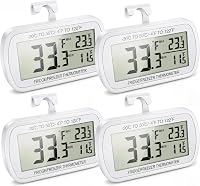
A digital thermometer gives you a clear number instead of a guess. The Waterproof Digital Fridge Thermometer has a 2.56-inch LCD that shows current, max, and min readings at once.
It reads from -4°F to 122°F with ±2°F accuracy and 0.2°F resolution. The magnetic back sticks to a steel shelf or door, and the stand or hook gives you two more placement options.
Its IPX3 waterproof rating handles the damp interior. A 4-pack means you can leave one in the chiller box and one in the main compartment.
This is a battery-powered tool, so keep spare CR2032 cells on hand.
How should you load a mini fridge?
Leave gaps between items and keep the vents clear. Cold air needs to move from the evaporator through the cabinet, and a packed fridge blocks that flow.
Put drinks and everyday items on the middle shelf and in the door. Store taller bottles in the door rack or remove the glass shelf to make room.
The chiller box is best for items you want extra cold, like a quick-chilled soda.
Don't push food against the back wall or block the fan. Warm leftovers should cool on the counter first, then go in.
Use shallow containers and stack them so you can still see what's inside. A little empty space is normal and helps the fridge recover after you open the door.
How do you keep drinks and food cold without freezing them?
Keep the door closed as much as possible and set the thermostat for steady cold rather than maximum. Every door opening lets warm room air in and makes the compressor work.
Group drinks so you can grab one without hunting. Store milk and juice in the door rack or on a middle shelf, not against the coldest back wall where they may freeze.
If the fridge has a chiller box, use it for fast chilling only.
Check the seal by closing the door on a piece of paper. If it slides out easily, clean the gasket or adjust the fridge's level.
A poor seal is a common reason a small fridge runs warm.
When and how do you defrost a mini fridge?
Unplug the fridge and let the ice melt when frost reaches about a quarter inch. The Midea uses a manual defrost system, so frost will build on the chiller box over time.
Empty the fridge and move food to a cooler. Leave the door open and let the ice soften, then wipe the interior dry before restarting.
Never chip at ice with a knife; a puncture in the liner or coolant line ruins the fridge.
After defrosting, reset the thermostat and let the cabinet cool before reloading. Frost slows cooling and wastes energy, so a quick defrost now and then keeps the fridge efficient.
How do you stop a mini fridge from wobbling or rattling?
Level the fridge and give the compressor clearance. A wobble usually comes from an uneven floor or from the cabinet touching a wall or cabinet.
Use a stand with leveling feet on carpet or uneven tile. The Adjustable Mini Fridge Stand With Leveling Feet adjusts from 17 to 26 inches in length and width and supports up to 400 lb.
Its stainless steel tubes and plastic panels raise the fridge 4 to 5 inches, which helps airflow and makes cleaning under it easier. Non-slip pads keep the feet from sliding.
Measure the fridge's footprint before setting the frame width. A steady fridge also reduces compressor noise.
See how to move a mini fridge safely when you need to shift it to a new spot.
How do you use a mini fridge in a bedroom or dorm?
Keep it quiet and well ventilated, and keep it away from the bed's head. Compressor fridges hum, so choose a low-noise model and leave clearance around the vents.
Don't block the back with curtains or bedding. Put the fridge on a hard surface or a stand rather than deep carpet.
Keep it out of direct sun from a window.
Load it with sealed drinks and snacks so smells stay contained. Clean spills right away to prevent mold in the warm dorm room.
If the fridge shares a room with a microwave, keep them on separate outlets when possible.
What should you never do with a mini fridge?
Don't lay it down and start it right away, don't block the vents, and don't use it as a freezer. These mistakes shorten the compressor's life or cause unsafe temperatures.
Skip extension cords where you can. Never store warm food directly from the stove.
Don't overload the door shelves past their limit. Avoid stacking heavy items on top of the cabinet unless the maker allows it.
If the fridge stops cooling, check the plug, the thermostat, and the seal first. A fridge that runs constantly may need a defrost or a warmer setting.
For a full picture of settings and safe storage, keep how cold a mini fridge should be handy as you adjust the dial.
Which setup supplies should you buy first?
For most people learning how to use a mini fridge, the fridge itself plus a thermometer covers the basics. Add a stand only if your floor is uneven or carpeted.
Pick the Midea for a quiet bedroom or dorm fridge with a reversible door. Add the Waterproof Digital Fridge Thermometer to confirm the real temperature.
Choose the Adjustable Mini Fridge Stand if the fridge wobbles or sits on soft carpet. Together they turn a basic setup into one you can trust, and each has a clear job from day one.
When you're ready to move the fridge to its final spot, read how to move a mini fridge safely first so the compressor stays protected. Check the watts it draws so the outlet you choose can carry the load without surprises.
Frequently asked questions
How long should a mini fridge sit before you plug it in?
Give it at least 2 to 4 hours upright after moving it, so the compressor oil can drain back into place. If it traveled on its side, leave it upright for longer before switching it on.
Starting it too soon can strain the compressor.
Can a mini fridge go in a bedroom?
Yes, as long as it has room for airflow and you accept some compressor hum. Leave a few inches around the sides and back, keep it off soft carpet, and choose a low-noise model like one rated under 42dB if sleep matters.
Never block the vent.
Does a mini fridge need to be level?
It should be close to level so the door seals evenly and the compressor runs smoothly. Small adjustments on uneven floors are enough.
Use a stand with leveling feet or shims rather than propping the cabinet with loose objects.
What should you not put in a mini fridge?
Skip anything that needs a stable, very cold freezer, plus large items that block the vents. Warm food should cool on the counter first.
Don't pack the door shelves so full that the seal strains or the shelves crack.
Can you put a mini fridge on carpet?
It can sit on carpet, but raise it so air can reach the base and the compressor stays cool. A stand with legs or leveling feet helps.
Soft carpet can also make the fridge wobble and tip when the door swings.