Are Mini Fridges Safe in Bedrooms?
Yes, mini fridges are safe in bedrooms when you plug them straight into a wall outlet, leave space around the vents, and keep bedding away from the cabinet. The main risks are heat buildup, electrical overload, and noise, and all three are easy to manage.
On this page (11 sections)
- Are mini fridges safe in bedrooms, or should they stay in the kitchen?
- What are the real safety risks of a mini fridge in a bedroom?
- How much clearance does a mini fridge need in a bedroom?
- Can you plug a mini fridge into a bedroom outlet safely?
- Which mini fridge is best for a bedroom?
- How do you stop a bedroom mini fridge from being noisy?
- How do you keep bedroom fridge temperatures in check?
- Is it safe to sleep in a room with a mini fridge running?
- How should you move or reposition a bedroom mini fridge?
- What should you check after the fridge has run for a day?
- The bottom line on mini fridge safety in bedrooms
Yes, mini fridges are safe in bedrooms when you plug them straight into a wall outlet, leave space around the vents, and keep bedding away from the cabinet. The main risks are heat buildup, electrical overload, and noise, and all three are easy to manage.
A compact fridge is a sealed appliance with no flame and no exhaust fumes. That makes it far less risky than a space heater or a candle, as long as you give it air and power it correctly.
Are mini fridges safe in bedrooms, or should they stay in the kitchen?
Mini fridges are safe in bedrooms as long as they sit on a hard surface with airflow on all sides. The cabinet releases heat into the room, so a closed-in corner or a spot under a low shelf makes the unit work harder.
Bedrooms are fine because the load is small. A 1.7 cubic foot unit like the Midea uses 246 kWh per year, a light draw for a 24-hour appliance.
The real questions are where it sits and what it sits near.
Keep these basics in mind before you move one in:
- Give the back and sides a few inches of clearance from walls and furniture.
- Don't tuck it inside a closet or a cabinet with the door shut.
- Keep it away from curtains, bedding, and anything that could block the vents.
- Set it on a hard, level floor rather than carpet.
If you're still deciding on a model, our guide to the quietest mini fridge picks cover units built for sleeping spaces.
What are the real safety risks of a mini fridge in a bedroom?
The real risks are heat, electrical faults, and noise, in that order. None of them is dramatic, but each one gets worse when the fridge is crowded or poorly placed.
Heat is the biggest one. The fridge pulls warmth out of the cabinet and pushes it into the room through the side and back panels.
Block those panels and the unit runs longer and hotter than it should.
Electrical faults come next. A damaged cord, a loose plug, or a daisy chain of extension cords can overheat.
The fridge itself is a low-draw appliance, but the outlet and cord need to be in good shape.
Noise and vibration are the third risk. A fridge that rattles against the floor or the wall can wreck sleep.
That's a comfort problem more than a safety one, and it's fixable.
How much clearance does a mini fridge need in a bedroom?
Give the fridge at least 2 to 4 inches of space at the back and sides and open air above it. Check your manual for the exact figure, since thermoelectric and compressor units differ.
Clearance matters because the fridge has to dump heat somewhere. If the back panel sits flush against a wall, that heat has nowhere to go.
The cabinet warms up and the unit runs longer than it should.
A few practical placements work well in a bedroom:
- Beside a dresser, with the back facing open floor.
- In a corner, but pulled out from both walls.
- On a stand or a low table, never directly on thick carpet.
- Away from the bed's foot, so nobody kicks the door at night.
Don't put it under a desk or inside a wardrobe. Enclosed spaces trap warm air and make the fridge work harder.
Can you plug a mini fridge into a bedroom outlet safely?
Yes, a bedroom wall outlet is the right place to plug in a mini fridge, provided the circuit isn't already loaded. Skip extension cords and power strips when you can.
A fridge runs day and night, so it deserves its own outlet or at least a socket with headroom. If the same circuit already runs a space heater, a window air conditioner, or a hair dryer, adding the fridge can trip the breaker.
A few rules keep the electrical side simple:
- Plug straight into the wall when the cord reaches.
- If you need an extension cord, use a heavy-duty one rated for the fridge's draw and keep it short.
- Never run a cord under a rug, behind bedding, or through a doorway.
- Check the plug and cord for warmth now and then.
To understand the load, see how many watts does a mini fridge use. The Midea 1.7 cubic foot model uses 246 kWh per year, a light draw for a 24-hour appliance.
Which mini fridge is best for a bedroom?
The best bedroom mini fridge runs quietly and holds a steady temperature without much fuss. The Midea 1.7 Cu Ft Low-Noise Mini Fridge is the pick for most bedrooms because Midea builds it for bedroom use and keeps the noise low.
It measures 17.6 inches deep, 18.6 wide, and 19.3 high, so it fits beside a nightstand or a desk. The door shelf holds a 2-liter bottle, and the adjustable shelf comes out when you need room for taller containers.
It's Energy Star certified, so it runs efficiently for its size.
One thing to plan for: this is a thermoelectric model with no freezer, so it chills drinks and snacks rather than freezing food. That suits a bedroom, where you mostly want cold water and a late-night snack.
How do you stop a bedroom mini fridge from being noisy?
Quiet starts with a level floor and a little isolation under the feet. A fridge that rocks or hums through the floorboards will sound louder at night than it does during the day.
Check that all four feet touch the floor and adjust them until the cabinet sits steady. If the floor is hard and the hum travels, anti-vibration pads help absorb the vibration before it reaches the room.
The phepetroll pads are 4 x 4 inches and 7/8 inch thick, with ribbed rubber on both faces to stop the fridge sliding. Each pad holds up to 960 lb, so a 28.8 lb mini fridge is well within range.
New rubber can carry a light odor, so air the pads outside for a few days before use.
They help most on wood floors and in upstairs rooms where vibration carries. Skip them if your fridge already sits solid with no rattle.
How do you keep bedroom fridge temperatures in check?
Keep the thermostat set and the door closed, and check the temperature now and then. A fridge that drifts warm or cold is usually telling you about airflow or a door seal problem.
Thermoelectric units like the Midea react slowly to temperature changes and do better in a room that stays reasonably steady. A fridge in a hot, sunny bedroom has to work harder than one in a shaded corner.
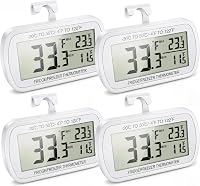
A small thermometer takes the guesswork out of it. Our guide to how cold should a mini fridge be covers the safe range for drinks and fresh food.
The GoveeLife set includes two sensors and a gateway, with a probe accurate to plus or minus 0.9°F. It sends app alerts and sounds an 80 dB alarm when temperatures leave your set range.
The gateway supports up to 10 sensors within about 230 ft.
Skip it if you want a simple dial you can glance at. The smart alerts earn their place when you keep medicine or dairy in the fridge and want to know the moment something goes wrong.
Is it safe to sleep in a room with a mini fridge running?
Yes, sleeping in a room with a mini fridge is safe. It's a sealed electric appliance with no open flame and no combustion, so it doesn't produce carbon monoxide or exhaust.
The things that affect sleep are comfort issues, not safety ones. A compressor fridge cycling on and off can be noticeable in a silent room, and warm air from the back panel can make one corner feel stuffy.
Both are manageable.
If the room gets warm, crack a window or run a fan rather than blocking the fridge vents. Good airflow in the room helps the fridge shed heat and helps you sleep.
How should you move or reposition a bedroom mini fridge?
Unplug it, empty it, and let it stand upright while you move it. If you have to lay it down, give it time to settle before plugging it back in.
A fridge that's been tipped or shaken should sit upright for a few hours before you turn it on, so everything settles back into place.
Our guide to how to move a mini fridge walks through the safe steps.
What should you check after the fridge has run for a day?
After a day of running, feel the sides, listen for rattles, and look for water. Warm side panels are normal.
A hot back, a loud knock, or a puddle under the cabinet is not.
A few checks catch most problems early:
- The plug and outlet should be cool to the touch, not warm.
- The fridge should sit level with no rocking.
- No water should pool underneath or inside.
- The door should seal all the way around with no gap.
If the back panel feels too hot to hold or you smell burning plastic, unplug it and have it checked. That's rare, but it's the one signal you should never ignore.
The bottom line on mini fridge safety in bedrooms
Mini fridges are safe in bedrooms when you keep the airflow clear, the outlet sound, and the floor level. Pick a spot with space on all sides, plug straight into the wall, and keep bedding and curtains away from the vents.
Choose the Midea 1.7 Cu Ft Low-Noise Mini Fridge for most bedrooms. Add the phepetroll pads if vibration is the issue and the GoveeLife thermometer if you want alerts.
With those basics in place, the fridge fades into the background and just keeps your drinks cold.
Frequently asked questions
Can I put a mini fridge next to my bed?
Yes, but leave a few inches between the fridge and the bed so warm air can escape and you don't kick the cabinet at night. Avoid pushing it against curtains or a comforter.
A gap on all sides keeps the fridge from working harder than it should.
Does a mini fridge use a lot of electricity in a bedroom?
Most compact fridges draw modest power and cost only a few dollars a month to run. The Midea 1.7 cubic foot model uses 246 kWh per year.
Check your outlet's circuit before adding other appliances to the same one.
Why does my bedroom mini fridge feel warm on the sides?
Warm side panels are normal, because the fridge moves heat from inside the cabinet to the room through its walls. It becomes a problem only when the unit can't shed that heat, which happens when airflow is blocked.
Give it clearance and keep the room ventilated.