Can a Mini Fridge Be Outside?
Yes, a mini fridge can go outside, but only in a spot that stays dry and shaded, and only if the manufacturer allows outdoor use. Heat, rain, and sun shorten its life, so a covered porch or garage beats an open patio.
On this page (12 sections)
- Can a mini fridge be outside at all?
- Why does outdoor heat matter so much for a mini fridge?
- Where should you put a mini fridge outside?
- Can a mini fridge handle rain and moisture?
- What temperature should you set an outdoor mini fridge to?
- How do you power a mini fridge outside?
- Should an outdoor mini fridge sit on a stand?
- How do you keep an outdoor mini fridge cool in summer?
- Can you leave a mini fridge outside in winter?
- What safety issues come with an outdoor mini fridge?
- Is a garage or a porch the better spot for a mini fridge?
- Which setup makes an outdoor mini fridge last longer?
Yes, a mini fridge can be outside, but only in a dry, shaded spot and only if the maker allows outdoor use. Heat, rain, and sun are the real limits, not the fridge itself.
A covered porch, a garage, or a shed with airflow works better than an open patio.
The short answer is that most mini fridges are built for indoor room temperatures. Moving one outside changes what it has to fight: hotter air, moisture, and dirt.
Plan the spot and the power before you carry it out.
Can a mini fridge be outside at all?
It can, in the right conditions. The fridge's job is to pull heat out of the cabinet and push it into the air around it.
Outdoors, that air is often warmer and wetter than a kitchen, so the same fridge has to work harder.
Check the maker's instructions first. Many compact fridges list an indoor use range and warn against rain or splashing.
If your model's manual says indoor only, keep it indoors and use it as a second fridge near the door.
The best outdoor spots share three traits: a roof overhead, shade for most of the day, and airflow on all sides. A porch against the house or a garage corner usually beats a sunny deck.
Avoid spots where sprinklers, gutters, or hose spray reach the fridge.
Why does outdoor heat matter so much for a mini fridge?
Heat makes the compressor run longer and cool less. A mini fridge moves heat from inside the cabinet to the room, and when the surrounding air is already hot, that job gets slower.
The fridge stays on more, the interior drifts warmer, and the motor wears faster.
The Midea 3.3 Cu Ft Low-Noise Mini Fridge shows the usual setup. It runs a high-efficiency compressor and holds 33.8°F to 50.0°F on its mechanical thermostat.
In hot outdoor air, the thermostat setting that works in a kitchen may not reach the same temperature.
Keep the fridge out of direct sun. A shaded spot can run several degrees cooler than a sunlit one, which eases the load.
Also leave a few inches of air space at the back and sides so the condenser can shed heat.
Where should you put a mini fridge outside?
Pick a covered, shaded, well-ventilated spot with a dry outlet nearby. The location decides how long the fridge lasts more than any other choice you make.
Good choices include a covered back porch, a garage away from the door opening, a shed with a vent, or a patio with a solid roof. Bad choices include open lawn, a spot under a leaky gutter, and anywhere the ground stays wet.
Keep the fridge off bare concrete that stays damp. A stand or a pallet raises it and lets air move underneath.
Check the mini fridge stand option below if your patio or garage floor is uneven.
Wind matters too. A covered spot that catches blowing rain can soak the fridge during storms.
A wall or screen on the weather side helps. If the spot floods in heavy rain, choose another one.
Can a mini fridge handle rain and moisture?
No, a standard mini fridge is not built for rain. Water can reach the compressor area, the wiring, and the door seal, and any of those can fail.
Moisture also rusts the cabinet over time.
Even under a roof, damp air can fog the door and condense on cold surfaces. Wipe the outside dry after wet weather and keep the door seal clean so it closes tight.
A fridge sitting in a puddle is a shock risk, so unplug it and move it before you clean up.
If your only outdoor spot is fully exposed, don't put a mini fridge there. Indoor placement near the patio door gives you cold drinks without the moisture problem.
What temperature should you set an outdoor mini fridge to?
Set it colder than you would indoors, and check the reading with a thermometer. The right number depends on what you store and how hot the air gets around the fridge.
For drinks, many people aim for the low 40s. For food, keep it at 40°F or below.
A fridge in a hot garage may need a lower thermostat setting just to hold that range. Our guide to how cold a mini fridge should be covers safe settings by contents.
Don't trust the dial alone. A mechanical thermostat can drift, and outdoor heat makes the gap wider.
Put a thermometer inside where you can read it without opening the door wide, and check it at the hottest part of the day.
How do you power a mini fridge outside?
Use a dry, covered, grounded outlet and a cord that reaches without strain. The fridge should plug straight into a wall outlet, not a chain of extension cords across wet ground.
A garage or porch outlet with a weatherproof cover is the safest setup. If you must use an extension cord, choose a heavy-duty outdoor-rated one, keep it off the ground, and never run it through standing water.
Check the wattage a mini fridge uses so the circuit isn't overloaded.
Don't power a mini fridge from a solar panel or battery bank unless the setup is sized for a compressor's startup draw. Small fridges pull a short surge when the compressor kicks in, and weak power can trip the fridge or the inverter.
Keep the plug and outlet out of splash range. A drip loop in the cord stops water from running down into the outlet.
Should an outdoor mini fridge sit on a stand?
Yes, a stand helps outside. It lifts the fridge off damp concrete or pavers, keeps airflow under the base, and makes the fridge easier to level on uneven ground.
Level feet matter more outdoors than in a kitchen. A tilted fridge can let the door swing open or fail to seal, which lets warm, humid air inside.
Adjustable feet let you correct the lean without shimming with wood scraps.
Measure the fridge's width and depth before you buy a stand. The Qoarxui frame adjusts from 17 to 26 inches and supports up to 400 lb.
It also gives you clearance to sweep under the fridge without moving it.
How do you keep an outdoor mini fridge cool in summer?
Shade it, vent it, and open the door less. Summer heat is the biggest threat to an outdoor fridge, and small habits make a real difference.
- Put the fridge under a roof or awning that blocks afternoon sun.
- Leave space at the back and sides for air to move.
- Keep the door closed; decide before you open it.
- Wipe condensation off the seal so it stays tight.
- Check the interior temperature at the hottest part of the day.
If the fridge can't hold 40°F in the hottest weeks, it's in the wrong spot. Move it to a cooler wall or indoors.
Can you leave a mini fridge outside in winter?
Only if the maker allows it and temperatures stay above freezing. Cold air is easier on the compressor than heat, but freezing weather brings other problems.
The oil in the compressor thickens, and the thermostat may not start the fridge reliably.
If your outdoor spot gets below about 40°F, plan to move the fridge indoors for the cold months. Unplug it, let it warm to room temperature, and dry it fully before storing.
Follow the maker's instructions for storage and restart.
When you move it, handle it upright and let it settle before plugging it in. Our guide to how to move a mini fridge covers the safe way to carry and restart it.
What safety issues come with an outdoor mini fridge?
The main risks are water near electricity, heat stress on the compressor, and pests. Water is the serious one.
A fridge near a downspout or on a wet patio can take in moisture and rust.
A covered outlet and a raised base reduce the risk. Unplug the fridge before you clean around it or move it.
Heat shortens the fridge's life. A shaded spot and airflow help, as does keeping the door closed in hot weather.
Insects and rodents can nest in the warm space behind a fridge. Check the back panel now and then and keep the area clear.
Much like the outlet rules in our guide to mini fridges in bedrooms, a garage or shed setup needs the same care.
Is a garage or a porch the better spot for a mini fridge?
A garage is usually the better outdoor spot, as long as it's dry and shaded. A porch is fine too, but it often catches more rain and sun than a garage corner.
A garage stays cooler and drier in most homes. Put the fridge away from the door opening and off the damp floor.
Check that the garage outlet is grounded and covered.
A porch works if it has a roof and a wall on the weather side. Keep the fridge out of direct sun and away from the edge where rain blows in.
A screened porch is better than an open one. Skip both if the space floods or stays humid, and keep the fridge indoors instead.
Which setup makes an outdoor mini fridge last longer?
A covered, shaded, level spot with a dry outlet is the setup that lasts. Start with the location, then add a thermometer to watch the temperature and a stand to keep the base dry and level.
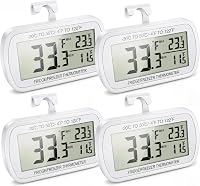
The Midea fridge gives you a compact 3.3 cu ft cabinet with a reversible door and mechanical thermostat. The waterproof thermometer shows the max and min so you can spot a hot afternoon.
The adjustable stand lifts it off damp ground and keeps the door sealing straight.
So can a mini fridge be outside? Yes, in the right place.
Pick a spot with a roof overhead and shade most of the day, keep the outlet dry and the base raised, and check the interior temperature in hot weather. If your only spot is open to rain or sun, keep the fridge indoors and run a cooler outside instead.
Frequently asked questions
Can a mini fridge be outside in the rain?
No. Rain and splashing water can reach the compressor, wiring, and door seals.
Even a covered patio gets windblown rain, so keep the fridge under a roof with a wall behind it and check that the outlet stays dry.
How hot is too hot for a mini fridge outside?
Most mini fridges are built for room temperature, roughly 60 to 90°F. When the air around the fridge climbs past that, the compressor runs longer and cools less.
Pick a shaded spot, and keep the fridge out of direct afternoon sun.
Does a mini fridge use more electricity outside?
Usually yes. A fridge in a hot spot works harder to hold its setting, so it runs the compressor more often.
Check how many watts a mini fridge draws, then expect a higher bill in summer or in a warm garage.
Should I put a mini fridge on a stand outside?
A stand helps on a patio or in a garage. It lifts the fridge off damp concrete and keeps airflow around the base.
Adjustable feet also keep it level on uneven ground, which helps the door seal sit straight.