Is Hisense a Good Mini Refrigerator Brand?
Hisense is a solid mini refrigerator brand for budget-minded buyers who want a compact fridge from a large appliance maker. It's a reasonable choice for a dorm, office or bedroom, but Hisense isn't the only name worth comparing before you buy.
On this page (8 sections)
- What does Hisense make in the mini refrigerator category?
- Is Hisense a good mini refrigerator brand for the money?
- How does Hisense compare with other mini fridge brands?
- What should you check before buying a Hisense mini fridge?
- What do you need to set up a Hisense mini fridge?
- How do you know a mini fridge is cold enough?
- How much power does a Hisense mini fridge use?
- Is Hisense a good mini refrigerator brand for you?
Hisense is a good mini refrigerator brand for shoppers who want a compact fridge from an established appliance maker at a budget-friendly price. The brand's mini fridges cover dorm, office and bedroom sizes, and the Hisense name carries some trust from its larger appliances.
That said, "good brand" doesn't mean "best pick for everyone," so it pays to compare specs before you decide whether Hisense is the right mini refrigerator brand for you.
This guide covers what Hisense actually offers in compact refrigeration, where the brand fits in the market, and how to judge a Hisense mini fridge against the alternatives.
What does Hisense make in the mini refrigerator category?
Hisense makes compact refrigerators aimed at dorms, offices, bedrooms and small apartments, ranging from small cube-style units to larger compact fridges with separate freezer compartments. The lineup leans toward budget and mid-range pricing rather than premium features.
Hisense is better known for televisions and full-size kitchen appliances. That background matters for mini fridge shoppers because it suggests the company has experience with compressor cooling and appliance support, even though compact units are a small part of its catalog.
The exact models and capacities change over time and by retailer. What stays consistent is the brand's positioning: practical compact cooling without the premium price tag of specialty brands.
If you want a wider look at the field, our guide to mini fridge brands and their top models puts Hisense next to its main competitors.
Is Hisense a good mini refrigerator brand for the money?
Yes, Hisense is generally a good value brand for mini fridges, because it competes on price while offering the basic features most compact-fridge buyers need. You get a compressor-driven fridge, adjustable shelving and a reversible or standard door on most models.
The catch is that budget pricing usually means fewer extras. Expect simpler thermostats, manual defrost on many units, and fewer smart features than you'd find on higher-end compact fridges.
For a dorm room or a spare bedroom, that trade-off is often fine.
Value also depends on the retailer's warranty and return policy, since those vary by seller and model. A low price is less appealing if support is hard to reach.
Check the return window before you order, and keep the packaging until you're sure the fridge cools properly.
How does Hisense compare with other mini fridge brands?
Hisense sits in the crowded middle of the mini fridge market, alongside names like Midea, Frigidaire and budget-focused brands such as Upstreman. It isn't the cheapest option and it isn't the most feature-rich, but it's a recognizable name with broad retail availability.
The practical difference between brands often comes down to the details on a specific model: freezer size, noise rating, energy use and warranty length. A well-specified budget brand can beat a famous name on those points.
Our advice is to compare models feature by feature rather than brand by brand. Check the capacity in cubic feet, whether the freezer is a true freezer compartment or just a chiller box, and the stated noise level in decibels.
Those three specs tell you more about daily life with the fridge than the badge on the door.
What should you check before buying a Hisense mini fridge?
Check the capacity, the freezer type and the dimensions first, then confirm the warranty and return terms. These four points decide whether a Hisense mini fridge will actually work in your space and fit your habits.
Capacity and freezer type
Mini fridges range from about 1.6 to 4.4 cubic feet in this class. A 1.7 cubic foot unit suits a dorm desk or a bedside, while a 3 to 4 cubic foot model works better for a small office kitchenette.
Freezer design matters more than shoppers expect. Some units have a small freezer-on-top compartment for ice cubes and frozen snacks.
Others have a chiller box that keeps food cool but won't freeze. Read the model description so you know which one you're getting.
A fridge-only unit won't hold ice cream no matter how low you turn the dial.
Dimensions and clearance
Measure your opening, your doorway and the path to the spot before ordering. Compact fridges need clearance at the back and sides for airflow, or the compressor works harder and the fridge runs warmer.
Warranty and support
Warranty length varies by model and seller. Confirm the coverage period and how to make a claim before the return window closes.
A one-year warranty is common in this price class.
What do you need to set up a Hisense mini fridge?
You need a level, ventilated spot, a grounded outlet and about 24 hours of settling time before you trust the temperature. Setup is simple, but a few steps prevent the most common complaints.
Place the fridge on a flat surface away from direct sun and heat sources. Leave clearance around the back and sides so the compressor can shed heat.
If the floor is uneven, a stand with leveling feet makes the job easier and keeps the door from swinging open on its own.
Let the fridge stand upright for several hours after delivery before plugging it in, especially if it was laid down during transport. Then run it empty until it reaches temperature.
For the full sequence, see our guide on how to move a mini fridge safely.
How do you know a mini fridge is cold enough?
Check the actual temperature with a thermometer rather than trusting the dial. Mini fridges often run warmer than their setting suggests, and the difference matters for food safety.
Aim for 37°F to 40°F in the main compartment. A small freezer section should sit near 0°F if it's meant for frozen food.
Our guide on how cold a mini fridge should be explains safe ranges and what to do if yours drifts.
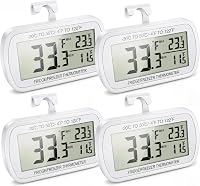
A digital thermometer takes the guesswork out of it. Place it on a middle shelf, away from the walls and the door, and check it after the fridge has run for a day.
If the temperature won't settle, the door seal or the thermostat setting is the usual suspect. Two thermometers are handy when you want one on the shelf and one in the freezer at the same time.
How much power does a Hisense mini fridge use?
Most compact fridges draw modest power, so the electricity cost is small compared with a full-size refrigerator. A typical mini fridge in this class uses around 0.5 kWh per day, though the figure depends on size, insulation and how often the door opens.
That works out to a few dollars a month at typical US rates. The bigger factor is placement: a fridge in a hot garage or next to an oven runs longer and uses more.
Keep it in a conditioned room when you can.
Our guide on how many watts a mini fridge uses covers typical wattage and what raises it. If you plan to run the fridge on a shared dorm outlet or a power strip, check the circuit's capacity first.
Is Hisense a good mini refrigerator brand for you?
Hisense is a good choice if you want a familiar appliance name at a budget-friendly price and you're willing to compare specs first. It's less compelling if you need a specific feature, a true freezer, or the lowest possible price in a given size.
Pick Hisense when the model you're looking at has the capacity, freezer type and dimensions you need, and the warranty and return terms are clear. If those boxes aren't ticked, a competing brand in the same size may serve you better.
Before you commit, measure the space, check the noise rating and set a temperature budget with a thermometer. Those steps turn "is Hisense a good mini refrigerator brand" from a brand question into a question about your specific model.
For a compact fridge with a separate freezer that covers the basics well, the Upstreman 1.7 Cu Ft model below is a solid comparison point.
Whichever brand you choose, the setup and temperature checks above matter more than the logo. A well-placed, correctly set budget fridge usually beats a poorly placed premium one.
Frequently asked questions
Is Hisense a reliable brand for small appliances?
Hisense is a large appliance maker with a long record in TVs and full-size refrigerators. That background gives buyers some confidence, but check the specific mini fridge model's warranty and return window before ordering, since compact units vary.
Where are Hisense mini fridges made?
Hisense is headquartered in China and runs manufacturing and assembly facilities in several countries, so the country of origin depends on the model. Check the label or product details for the exact origin if that matters to you.
Does Hisense make mini fridges with a freezer compartment?
Some Hisense compact refrigerators include a small freezer compartment, while others are fridge-only. Read the model description carefully, because a fridge-only unit won't keep ice cream frozen even if the main compartment gets cold.
What size Hisense mini fridge fits a dorm room?
Most dorm-friendly Hisense compact fridges land in the 1.6 to 4.4 cubic foot range. Measure your space and doorway first, then pick the largest capacity that fits with clearance for airflow around the back and sides.